
10 UAE Property Purchase Red Flags to Watch Before Buying in 2026
Overview
Introduction: Why Due Diligence Matters More Than Ever in 2026
Thinking about buying a home or an investment property in the UAE? You are not alone. The Dubai real estate market is booming right now. In fact, Dubai property sales hit a massive Dh176.7 billion in the first quarter of 2026 alone, with off-plan demand still going strong. Prices are also climbing. According to recent data, average residential prices reached around Dh1,949 per square foot, and the citywide weighted average sits at about AED 1,689 per square foot.
That kind of activity can make anyone excited to jump in. But here is the truth: a hot market also hides more traps.
Many buyers rush into deals without doing proper homework. They skip legal checks, trust a developer’s promises too easily, or get swept up by a flashy sales pitch. And that is how people lose serious money.
The UAE property market in 2026 is full of opportunity, but it also has real risks for uninformed buyers.

Whether you want to invest in Dubai real estate for rental income or find your dream home, one wrong move can cost you thousands. That is why due diligence matters more than ever this year.
This article is here to help. We have put together a clear, structured list of UAE property purchase red flags you need to watch out for. Every point is backed by research and expert insights so you can make smart choices with confidence.
Before you sign anything, take a few minutes to learn what could go wrong. And if you are still searching for a reliable partner, be sure to read our guide on how to find a trustworthy real estate agent in Dubai in 2026. It will save you a lot of headaches.
Let us walk through the biggest warning signs so you can buy smart, not sorry.
1. Overvalued Properties and Unrealistic Pricing
Have you ever seen a home listed for way more than similar places nearby? That happens a lot in a hot market like Dubai. In 2026, with sales hitting Dh176.7 billion in just the first quarter, some sellers and developers push prices well above fair value. If you do not know what comparable properties are selling for, you can easily overpay.
That is one of the most common UAE property purchase red flags.
Here is how to spot it. Always check real data. According to a recent report, the average residential price in Dubai reached about Dh1,949 per square foot early in 2026. But that number varies by area. ValuStrat put the citywide weighted average at AED 1,689 per square foot, while a community like Jumeirah Village Circle averages AED 1,448 per square foot. If someone is asking way more than those benchmarks for a similar property, you need to ask why.
Beware of off-plan deals that sound too good to be true. Some projects promise huge discounts or returns that do not match reality. Always compare with official RERA data and recent transactions. For a closer look at how different developers price their projects, check our comparison of Emaar Properties vs RAK Properties.
Your best defense is simple. Know the numbers before you make an offer. That way you avoid paying thousands more than a property is really worth.
2. Incomplete or Delayed Handover from Developers
You found a property that seems priced fairly. But if it is an off-plan project, you still have a big risk. The developer might not finish on time. Or worse, they might not finish at all. In 2026, off-plan delays remain one of the most common UAE property purchase red flags.
Here is a fact you need to know. The average delay across all developers sits around 8 to 9 months, according to recent 2025-2026 data. That number changes a lot depending on the developer tier. Top-tier builders tend to stick closer to their promised dates. Smaller or newer developers often miss the mark.
So how do you protect yourself? Start by checking the developer’s track record. Have they delivered past projects on time? You can search for project status updates on the Dubai Land Department’s website. Also, all off-plan payments must go into a RERA regulated escrow account. This rule is under Law No. 13 of 2008. It keeps your money safe and only releases funds as construction hits certain milestones.
Watch for these clear red flags:
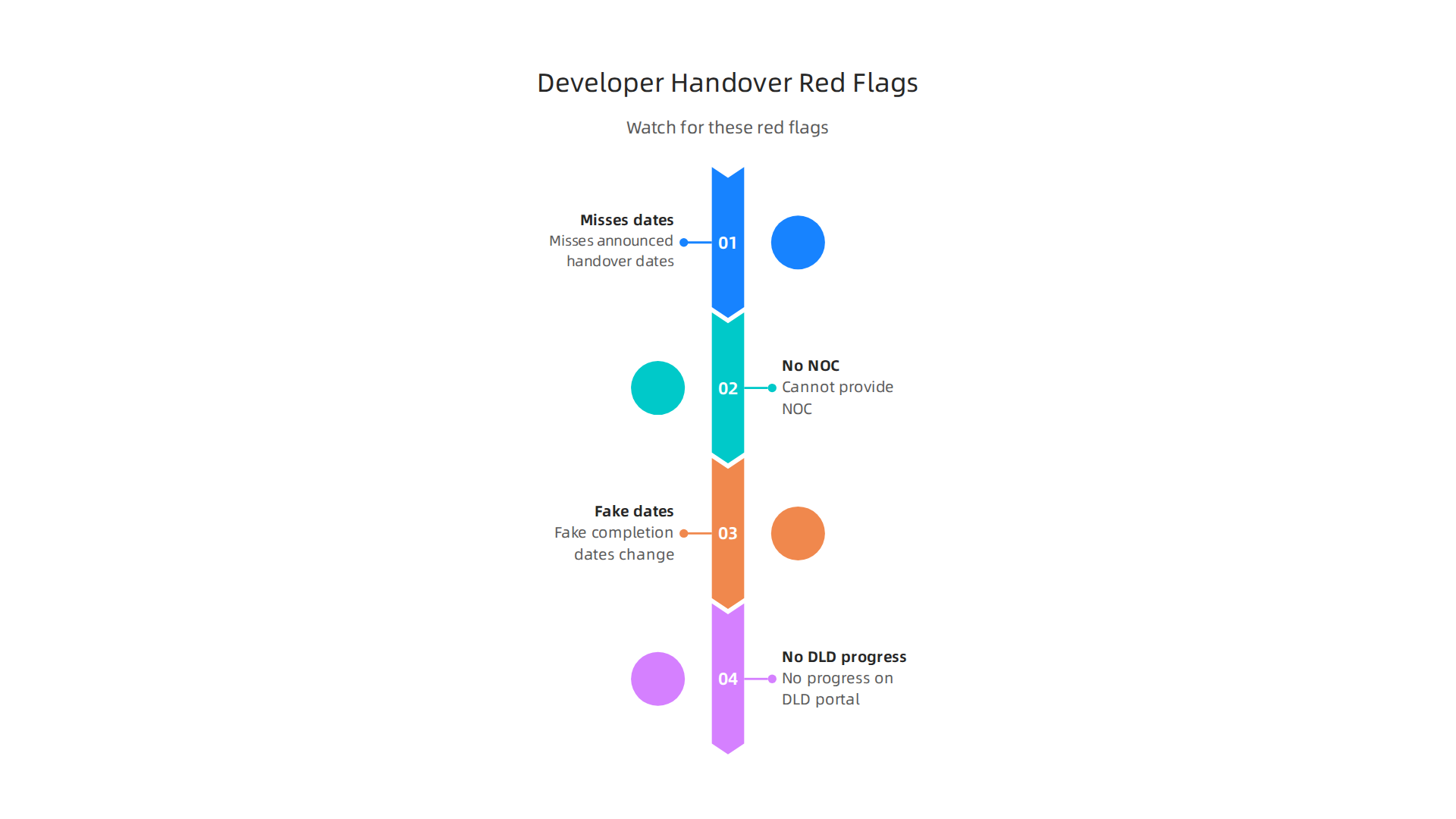
- The developer misses announced handover dates without a real reason.
- They cannot provide a No Objection Certificate (NOC) when asked.
- They give you fake completion dates that keep changing.
- The project status shows no progress on the DLD portal.
If you face a delay, you have legal rights. RERA can fine or even suspend developers who break the rules. You can also file a formal complaint. For a closer look at how different developers perform, check our comparison of Emaar Properties vs RAK Properties.
Knowing these signs before you sign a contract can save you months of stress and lost money. Always do your homework on the developer first.
3. Hidden Fees and Additional Costs
You finally find a property that looks perfect and fits your budget. The sticker price seems fair. But here is a trap many buyers miss. The real cost of buying a home in Dubai goes way beyond the asking price.
In 2026, the total cost of ownership is often 8 to 12 percent above the purchase price. That extra amount can surprise you if you are not ready. The biggest hidden fee is the Dubai Land Department (DLD) transfer fee. You pay 4 percent of the property’s value right when you buy, as noted in the DLD fees guide by Engel & Völkers. On a AED 1 million property, that is AED 40,000 extra.
Then you have service charges. These are ongoing costs for maintaining common areas in apartments and communities. In Dubai, service charges range from Dh3 to Dh30 per square foot, depending on the building and location. You also pay registration fees at the trustee office, which can be AED 4,000 plus 5 percent VAT for properties over AED 50,000, according to Penieltech’s breakdown of unexpected expenses.
Other costs that often sneak up on buyers include:
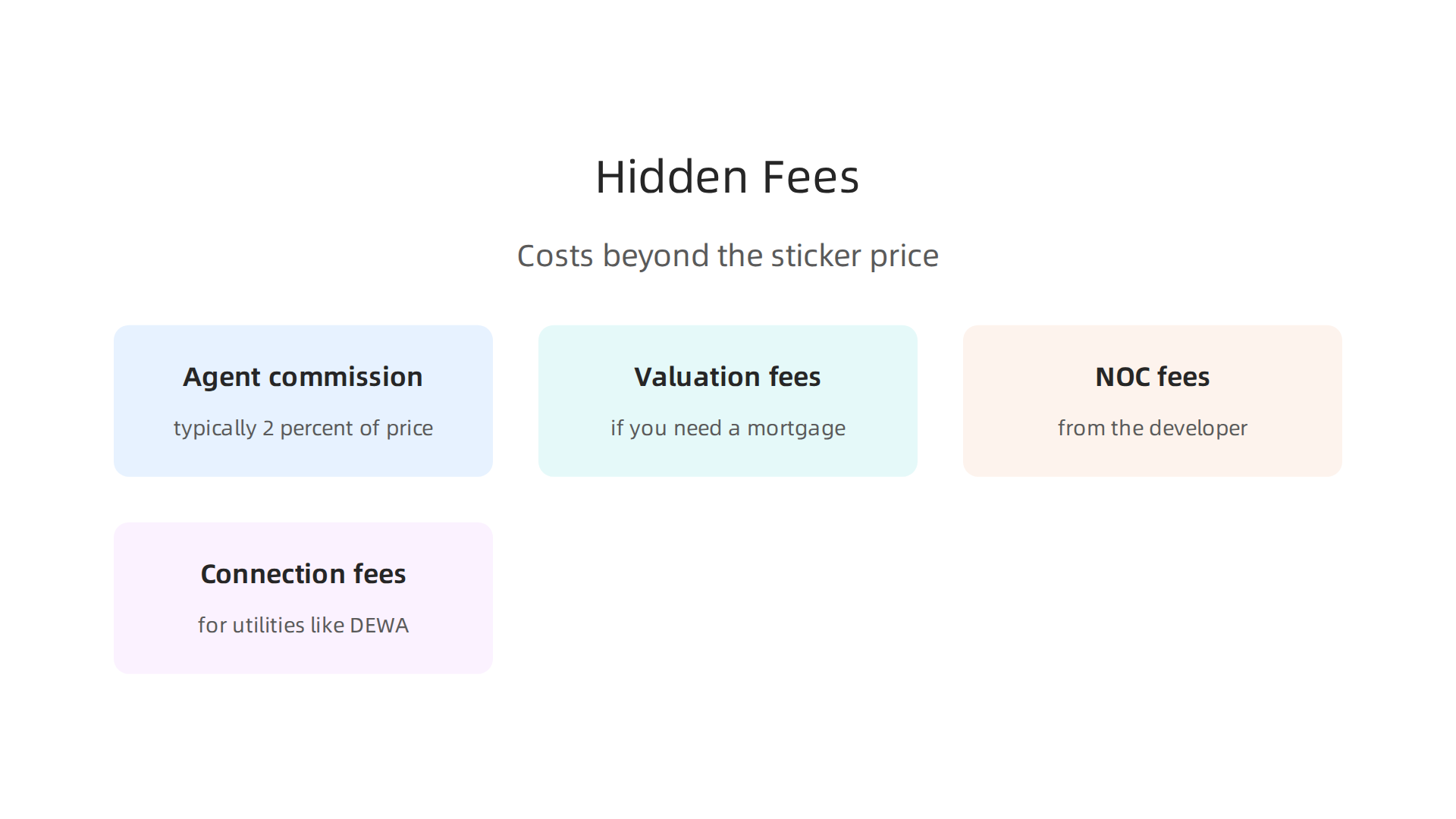
- Agent commission (typically 2 percent of the purchase price)
- Valuation fees if you need a mortgage
- NOC fees from the developer
- Connection fees for utilities like DEWA
Before you sign any contract, always request a full written breakdown of every single cost. Ask your agent or the seller directly. If they hesitate or give vague answers, consider that one of the serious UAE property purchase red flags.
To protect yourself from unexpected charges, check the DLD’s Service Charge Index to verify what your future annual fees should be. And before you commit, read our guide on how to find a trustworthy real estate agent in Dubai so you work with someone who is upfront about all costs from day one. Dubai Real Estate News helps you uncover these hidden fees so you invest with confidence.
4. Legal Encumbrances and Ownership Disputes
Here is a scary scenario. You find the perfect apartment. You pay a deposit. Then you find out the seller still owes money on the property. Or worse, someone else claims to own it.
This happens more often than you think. Properties in Dubai can have existing mortgages, unresolved liens, or even inheritance disputes tied to them. These are called legal encumbrances, and they are one of the biggest uae property purchase red flags you can face.
The good news is you can avoid this trap. The key is to always conduct a title deed search before you hand over any money.

The Dubai Land Department (DLD) makes this easy. You can verify ownership and check for any restrictions online through the DLD Title Deed Verification service or the Dubai REST App. As Engel & Völkers explains, this check lets you confirm registration numbers and ownership details instantly.
For a deeper look, you can also use a trusted property search firm. Through a title deed check, investors can confirm encumbrances and restrictions directly, according to Driven Properties. This simple step protects your hard-earned money.
Watch out for these signs of trouble:
- The seller cannot show a clear title deed
- There are pending court cases on the property
- The ownership history seems messy or incomplete
- Multiple people claim to be the owner
If you notice any of these, walk away. Do not risk your real estate investment on a property with unclear legal status. A clean title is non-negotiable.
When you are ready to invest with confidence, make sure you work with someone who understands these risks. Read our guide on how to find a trustworthy real estate agent in Dubai so your next purchase is safe from the start.
5. Poor Property Condition and Inspection Issues
You walk into a property and it looks perfect. Fresh paint. Clean floors. New fixtures. Looks can be deceiving. Behind those pretty walls, serious problems could be hiding. Water leaks, bad wiring, or even structural cracks are common uae property purchase red flags that cost thousands to fix later.
According to a 2025 guide from Property Snagging DXB, the most common defects in Dubai properties include water leaks behind walls, poor HVAC installation, electrical faults, and plumbing defects. These issues are not always visible during a casual visit. That is why a professional home inspection is a must, whether you buy a ready property or a new one.
For new properties, snagging is critical. As the Sheridama guide explains, you should inspect during the defect liability period to catch problems the developer needs to fix. For older properties, an independent inspector can check everything from tiles and grouting to water pressure and electrical grounding.
Watch for these red flags:
- The seller or agent refuses to let you arrange an independent inspection
- Maintenance records are missing or incomplete
- You spot signs of unauthorized modifications, like walls that may not be original
- The property smells musty or has water stains, even if recently painted
A proper inspection costs a few hundred dirhams but can save you from a huge financial headache. As the Anika Property checklist warns, hidden defects can cost up to AED 45,000 or more. That is a big hit on your real estate investment.
If you are choosing between developers, it helps to compare their construction quality. Read our Emaar Properties vs RAK Properties comparison to see which builder has a better track record on quality.
Bottom line: never skip the inspection. If a seller pushes back, that itself is a red flag. You want to invest in dubai real estate with full confidence, not with hidden surprises.
6. Misleading Marketing and Developer Reputation
Have you ever seen a property video that made a studio look like a palace? Or a brochure promising a five-minute walk to the beach, only to find out it is really a thirty-minute drive? These tricks happen more often than you think. Exaggerated renderings, false proximity claims, and artificially high rental yields are some of the most common uae property purchase red flags you need to watch out for.
Here is the thing: developers know that first impressions sell. But a glossy ad does not tell you if the developer actually delivers on time. Off plan delays are a real problem in Dubai. According to a 2026 report, the average delay across all developers is about 8 to 9 months, but this varies a lot by developer tier. Top tier developers usually stick to their timelines, while newer or less reputable ones often fall behind. You can check a developer’s track record by looking at how many projects they have completed on time. The Dubai Off Plan Handover Delays 2026 guide explains exactly what to look for.
So how do you spot a trustworthy developer? Do your homework. Research the developer’s history, past project quality, and customer reviews. Look for complaints from previous buyers. The Real Estate Regulatory Authority (RERA) keeps records of developer complaints and penalties. If a developer has pending complaints, a low freehold registration percentage, or no track record at all, take that as a serious warning. The RERA Dubai 2026 guide breaks down how the regulator monitors developers and protects buyers.
Here are the red flags to watch:
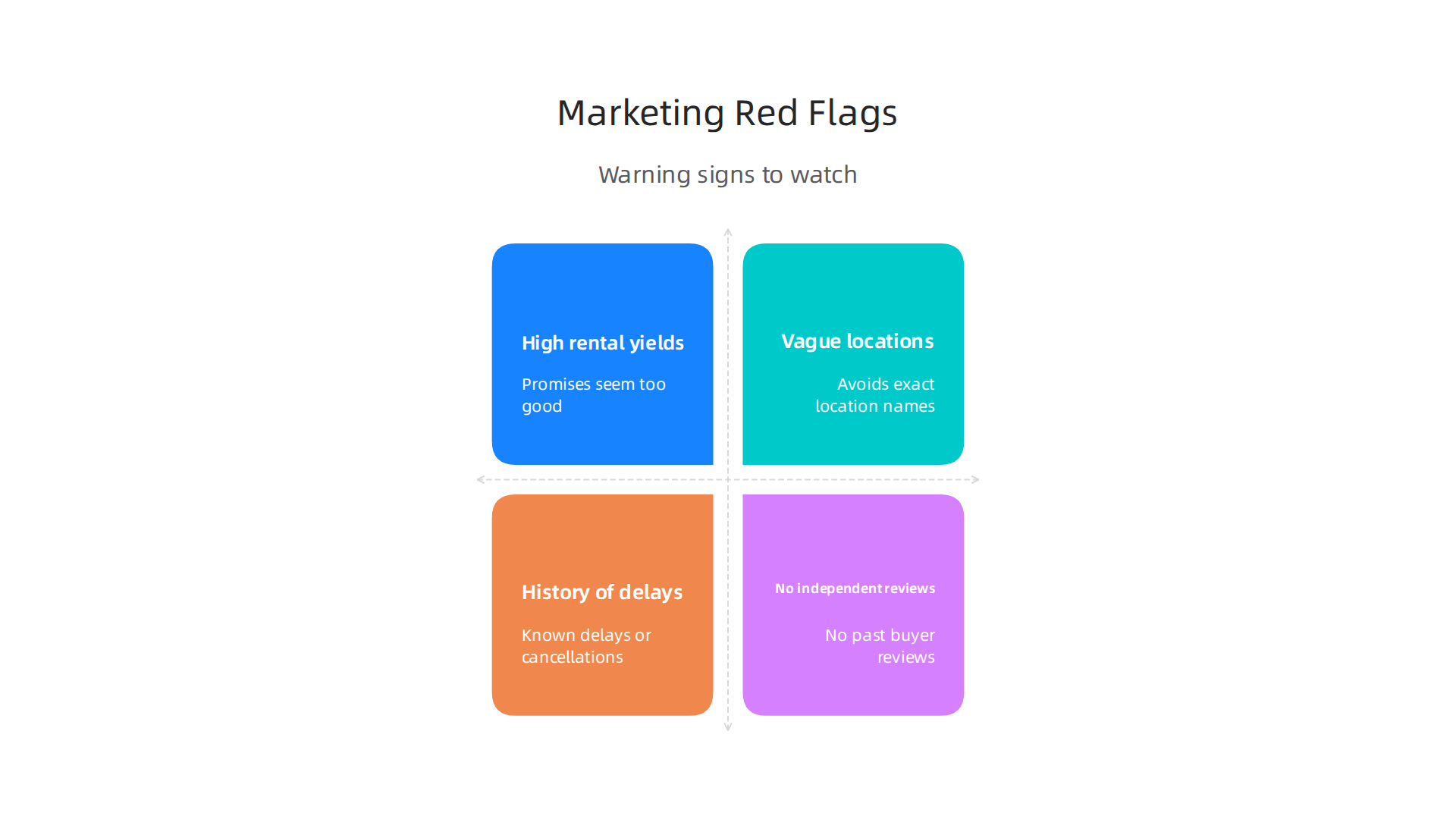
- Promises of rental yields that seem too high compared to market averages
- Marketing that avoids naming exact locations or uses vague terms like "minutes away"
- Developer has a history of delays or cancelled projects
- You cannot find independent reviews from past buyers
If you are unsure about which developer to trust, compare their delivery records side by side. Check our Emaar Properties vs RAK Properties comparison to see how two different builders stack up on quality and reliability.
Always verify what the brochure says. Visit the area yourself. Talk to residents or other investors. And if a developer refuses to share their RERA registration number or project completion dates, walk away. That is not a risk you want to take with your dubai real estate investment.
7. Inadequate Rental Yield Projections
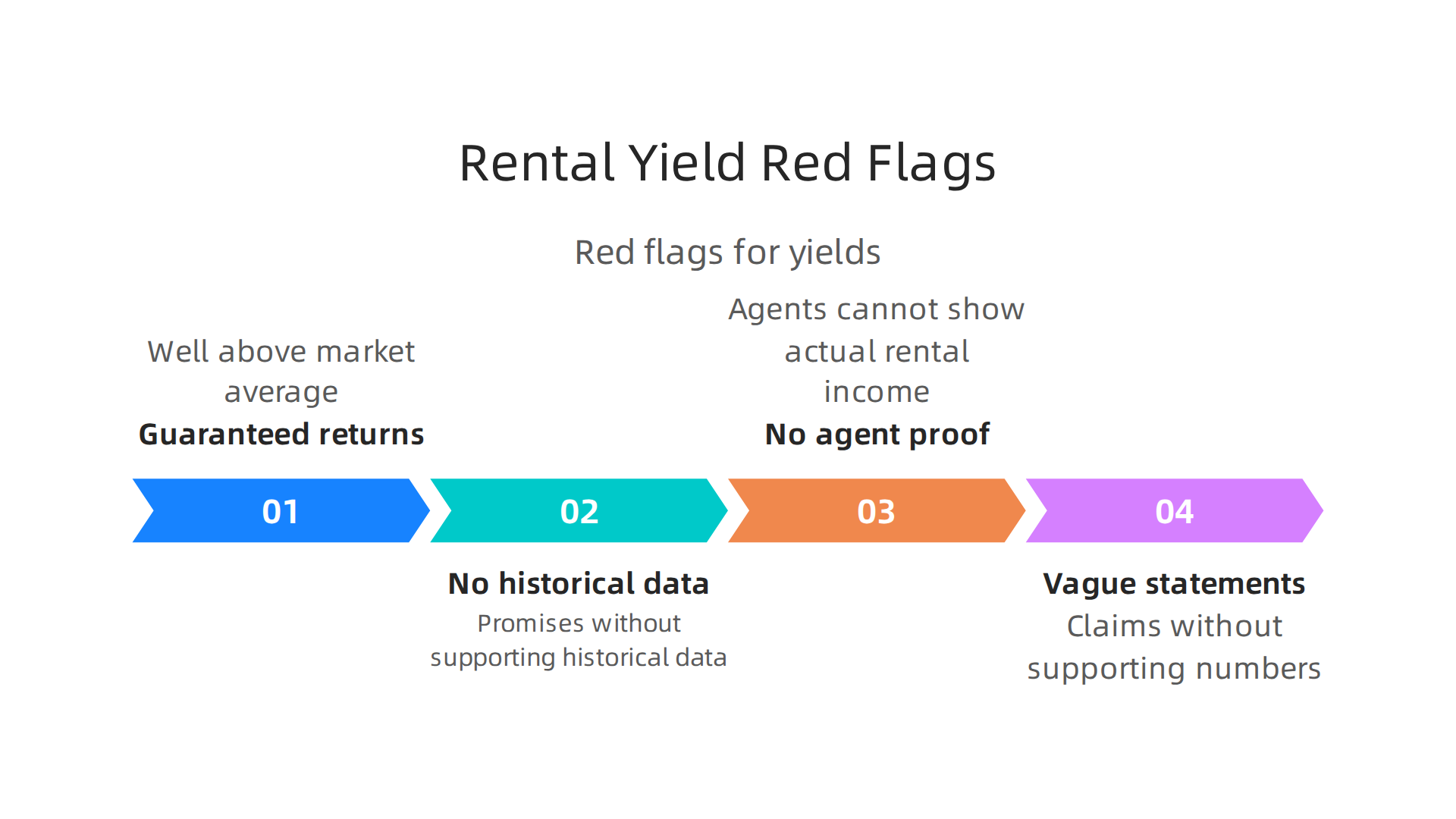
Here is another trick that can cost you real money. Developers or agents may promise rental income that sounds amazing but has no basis in reality. They might say you will get a 12% or 15% return, which is way above what the market actually delivers. If you see these numbers, treat them as serious uae property purchase red flags.
So what is realistic? In 2026, the average gross rental yield in Dubai is around 5.5% to 7%, depending on where you buy and what type of property you choose. For example, a one-bedroom apartment in a good area typically yields about 5.86%. You can check the latest figures in the 2026 rental yield guide from GuestReady. A yield between 6% and 8% is still considered strong, according to the 2026 Property Finder analysis. Anything above that range should make you ask hard questions.
Here are the red flags to watch:
- Guaranteed returns that are well above the market average
- Promises that do not come with historical data or real rental listings
- Agents who cannot show you actual rental income from similar properties in the same area
- Vague statements like "high yield guaranteed" without supporting numbers
The best way to protect yourself is to check real data. Look at what similar units in the neighborhood actually rent for. Use tools like DXB Interact to see real transaction data and rental trends. And if a seller refuses to share this information, that is a clear warning.
Want to make sure you are not falling for inflated promises? Talk to someone who knows the local market inside out. Our guide on how to find a trustworthy real estate agent in Dubai can help you connect with experts who give honest advice. Do not let a shiny number on a brochure cost you real income.
8. Complex Title Deed and Registration Issues
Another area where things can get messy is ownership paperwork. You might think you are buying a property, but if the title deed is not in order, you could face big problems later. This is a major one among uae property purchase red flags.
For off-plan properties, the situation is even trickier. The unit may not have a final title deed yet. Instead, it should have an Oqood certificate. This certificate proves that the sale has been registered with the Dubai Land Department (DLD). Always check that the property is registered with the Real Estate Regulatory Authority (RERA) and that the Oqood is valid.
Here are the warning signs to look for:
- The seller cannot show you the original title deed.
- The property is registered under a different owner’s name.
- The title deed shows any kind of mortgage, lien, or legal dispute.
- The seller rushes you and says you can "sort out the paperwork later."
You can easily verify a title deed yourself. The DLD website and the Dubai REST app let you check ownership details, registration numbers, and any restrictions on the property. This is a fast and free way to confirm the seller actually owns what they are trying to sell.
If this process sounds confusing, do not worry. Working with a professional can save you from costly mistakes. You can use our guide on how to find a trustworthy real estate agent in Dubai to get expert help with verifying documents and navigating the registration process. A small step now can prevent a huge headache later.
9. Financing and Mortgage Pre-Approval Pitfalls
You found the perfect Dubai property. The title deed is clean. The price feels right. But here is a question that stops many deals cold: Can you actually get the loan?
A lot of people jump into a real estate investment thinking they will qualify for a mortgage. Then the bank says no.

Or the approval takes too long. The seller walks away. And you lose your deposit.
The fix is simple. You need mortgage pre-approval before you start shopping. This is different from just pre-qualifying. Pre-approval means the bank has checked your documents, your income, and your credit score. They tell you exactly how much they will lend you.
Red flags to watch for:
- You hear "let’s worry about the loan later" from the agent or seller.
- The lender asks for a high commitment fee without clear refund rules.
- The mortgage terms are vague, especially about early settlement penalties.
- You are not comparing rates from multiple banks.
Here is the other hidden piece. Even with a good mortgage, you still need cash for extra costs. The Dubai Land Department Fee is 4% of the property price, as explained in this DLD fees guide. Add registration fees, broker fees, and service charges. These can add up quickly. Make sure your budget covers everything, not just the down payment.
If you want to invest in dubai real estate the right way, getting your finances in order first is a must. Talk to a professional who can guide you through the process. You can use our guide on how to find a trustworthy real estate agent in Dubai to find someone who understands both property and financing. A small step today can save you from a big loss tomorrow.
10. Exit Strategy and Resale Challenges
You buy a property. Everything looks good. Then a few years later, you want to sell or rent it out. And nobody wants it. That is a nightmare for any real estate investment.
This is why you need to think about your exit strategy before you even sign the contract. A property that traps your money is not an investment. It is a liability.
Red flags to watch for:
- Declining prices in the area. If prices have been dropping for a year or more, that is a warning sign.
- High vacancy rates. Walk around the neighborhood. Are many apartments empty? If so, finding a tenant could be hard.
- Planned oversupply. Check if many new projects are launching nearby. Too many units can hurt your rental income and resale value.
Another hidden trap? The physical condition of the property. If there are hidden defects like water leaks or electrical faults, buyers and tenants will stay away. That is why a proper property inspection in Dubai is so important before you buy.
You should also check the resale history and average days on market for similar units in the building. If units sit unsold for months, that is a clear uae property purchase red flag.
Want to make sure you invest in dubai real estate wisely? Team up with a professional who can help you analyze the market and pick a property you can actually sell later.
Summary
This article lays out the key UAE property purchase red flags buyers must know in 2026, explaining why a booming Dubai market also increases risks. It reviews how to spot overvalued listings, off‑plan handover delays, hidden fees, legal encumbrances, poor property condition, misleading marketing, unrealistic rental yields, financing pitfalls, and exit‑strategy problems. The guide explains practical checks—use DLD and RERA records, insist on escrow protections for off‑plan sales, get title‑deed verification via the Dubai REST app, obtain mortgage pre‑approval, and commission a professional inspection—to avoid costly surprises. By following these steps and asking the right questions, readers will be better prepared to verify developers, budget for true costs, protect their ownership, and make more confident Dubai real‑estate decisions.