
How to Safely Invest in Real Estate in Dubai 2026
Overview
Dubai is a city that many people look at when they want to invest property. It is known all over the world for its amazing buildings and quick growth. In 2026, it still stands out as a top spot for people who want to put their money into real estate. This city offers exciting chances for those looking to invest in real estate in Dubai. Think about owning a piece of a truly global city.
But, like any big decision, investing here has its ups and downs. Many people find it hard to get good, honest information. They might worry about how real estate legal services work or if they are following all the rules. The market can seem tricky, with prices changing often. For example, after a strong start, Dubai’s property market saw prices soften in many areas by June 2026, entering a rebalancing phase Dubai Real Estate Market May 2026 Update. This can make people feel unsure about when or where to invest.
It is easy to feel confused by all the market data or to worry about making a wrong choice.
You might ask, "Is now a good time?" or "How do I make sure my investment is safe?" These are common questions when dealing with Dubai international real estate. It is important to have clear information and good advice to help you decide.
If you are thinking about investing in Dubai property or have questions about the market, getting expert advice can make a big difference.
FREE Dubai Real Estate Consultation to help you understand market trends and winning strategies.
Getting good advice helps you understand what is truly happening in the market. In 2026, Dubai’s property market has been quite active. After a strong start to the year, prices began to soften and enter a rebalancing phase in many areas by June 2026. This means the quick rises seen before started to slow down. For example, the Property Monitor Dynamic Price Index, which tracks home prices, fell to its lowest point since the middle of 2025 by June 2026 Dubai Real Estate Market Report – June 2026. Some reports even showed that residential prices fell by 4% to 7% between February and April of 2026 Dubai’s residential prices fell 4-7% during the Feb-April 2026.
However, it is not all drops. When you look at the whole year, prices were still higher than last year. For instance, in February 2026, residential sales prices increased by 10.79% compared to the same time last year UAE Residential Property Price Report – February 2026. Rent prices also went up, showing a 5.21% increase year-over-year. Even with some recent slowing, the average price for property was around AED 1,900 per square foot in the first half of 2026, which shows good underlying value for those who want to invest property.
Looking at new homes, there are many new apartments and villas planned to be ready by the end of 2026. About 65,000 apartments and 12,500 villas are expected. But, some of these might not be finished until 2027 because of problems getting building materials Property prices are down in Dubai. Is it a war-induced blip, …. This delay can actually be good, as it prevents too many homes from coming onto the market at once, helping to keep prices stable.
The demand to invest in real estate in Dubai is still strong because of a few big reasons:
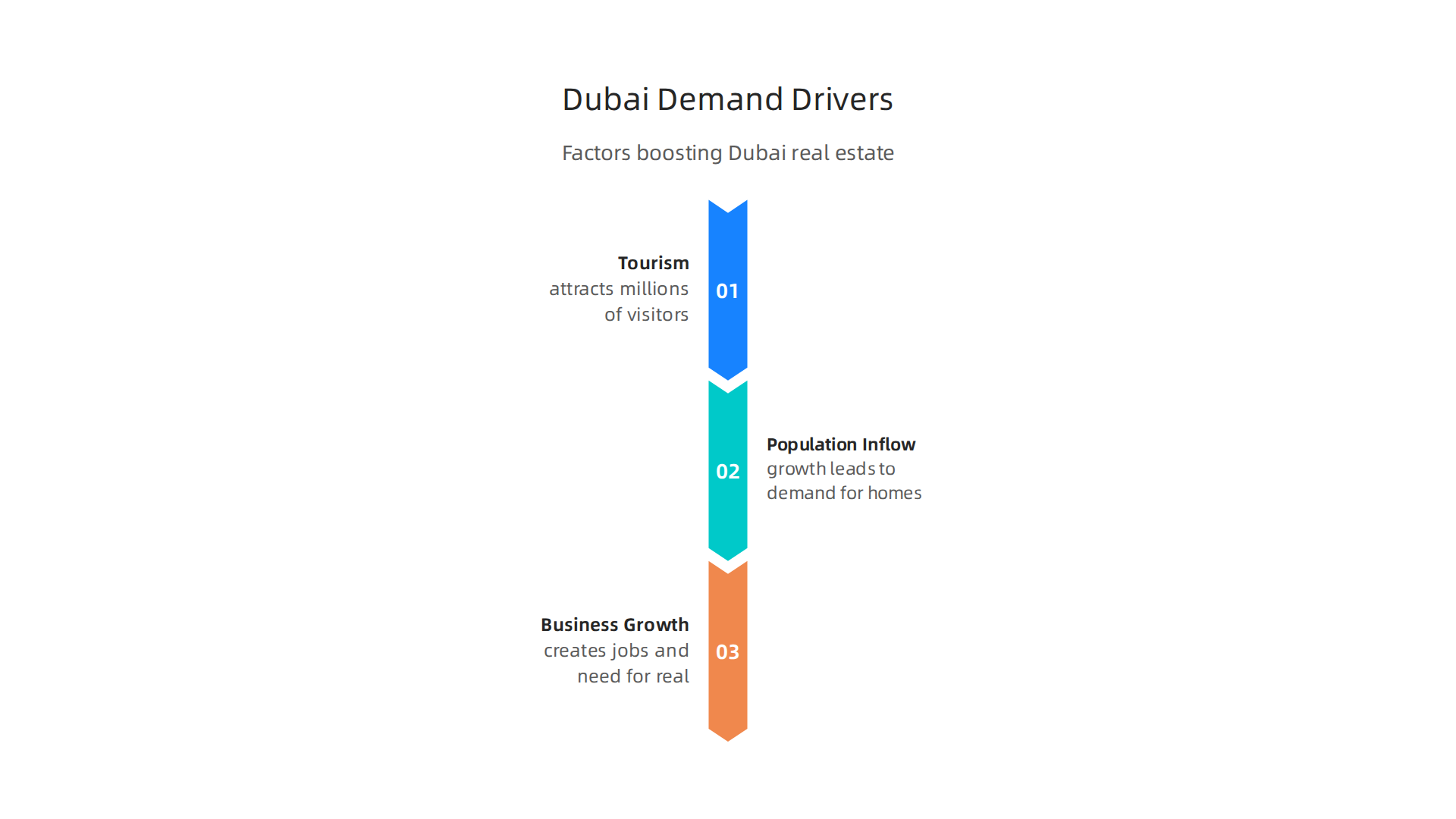
- Tourism: Dubai continues to attract millions of visitors. This means there is a constant need for hotels, holiday rentals, and services, which supports the real estate market.
- More People Moving In: Lots of people are choosing to move to Dubai for work and life. This growth in population directly leads to more demand for homes, both to rent and to buy.
- Strong Business Growth: Dubai is a big place for businesses to grow. New companies are setting up, and existing ones are getting bigger. This creates jobs and a need for more commercial real estate Dubai, as well as homes for all the workers.
These strong points keep many people interested in Dubai international real estate for the long haul. Understanding these market changes is key to making smart choices when you invest property. For more helpful tips, consider reading our guide on smart investments in real estate for beginners in Dubai 2026.
Now that you know how the Dubai market is doing, the next big step is to pick the right kind of property to invest property. This choice depends a lot on what you want to achieve. Are you looking for steady income now, or do you hope for your property’s value to grow a lot over time? Let’s look at the different types of properties you can buy in Dubai.
Off-Plan vs. Ready Properties
One of the first choices you will face when you invest in real estate in Dubai is between buying an "off-plan" property or a "ready" property.
-
Off-Plan Properties: These are properties you buy before they are built, often directly from a developer.
- Pros: They usually come with a lower starting price and flexible payment plans, meaning you pay in stages as the building goes up. Many experts say that off-plan properties can offer a good chance for their value to grow a lot by the time they are finished. Some reports for 2026 suggest off-plan properties can give 15-25% appreciation with a smaller down payment Dubai Off-Plan vs Ready Property: Investment Comparison 2026.
- Cons: You won’t get any rent money right away because the property isn’t built yet. You also need to be patient, as construction can sometimes take longer than expected.
-
Ready Properties: These are properties that are already built and ready for someone to move in or rent out.
- Pros: The biggest plus is that you can get rental income almost immediately. This is great if you want to start earning money from your investment right away. Ready properties often offer rental yields between 5-8% for apartments and 4-6% for villas in 2026 Dubai Real Estate Market Report: Q2 2026. They also offer more certainty since you can see the finished product.
- Cons: Ready properties generally have a higher upfront cost than off-plan ones. While they provide income, their value might not grow as quickly as a well-chosen off-plan property.
Choosing Your Property Type: Apartments, Villas, and Commercial
After deciding between off-plan and ready, you need to think about the type of property.
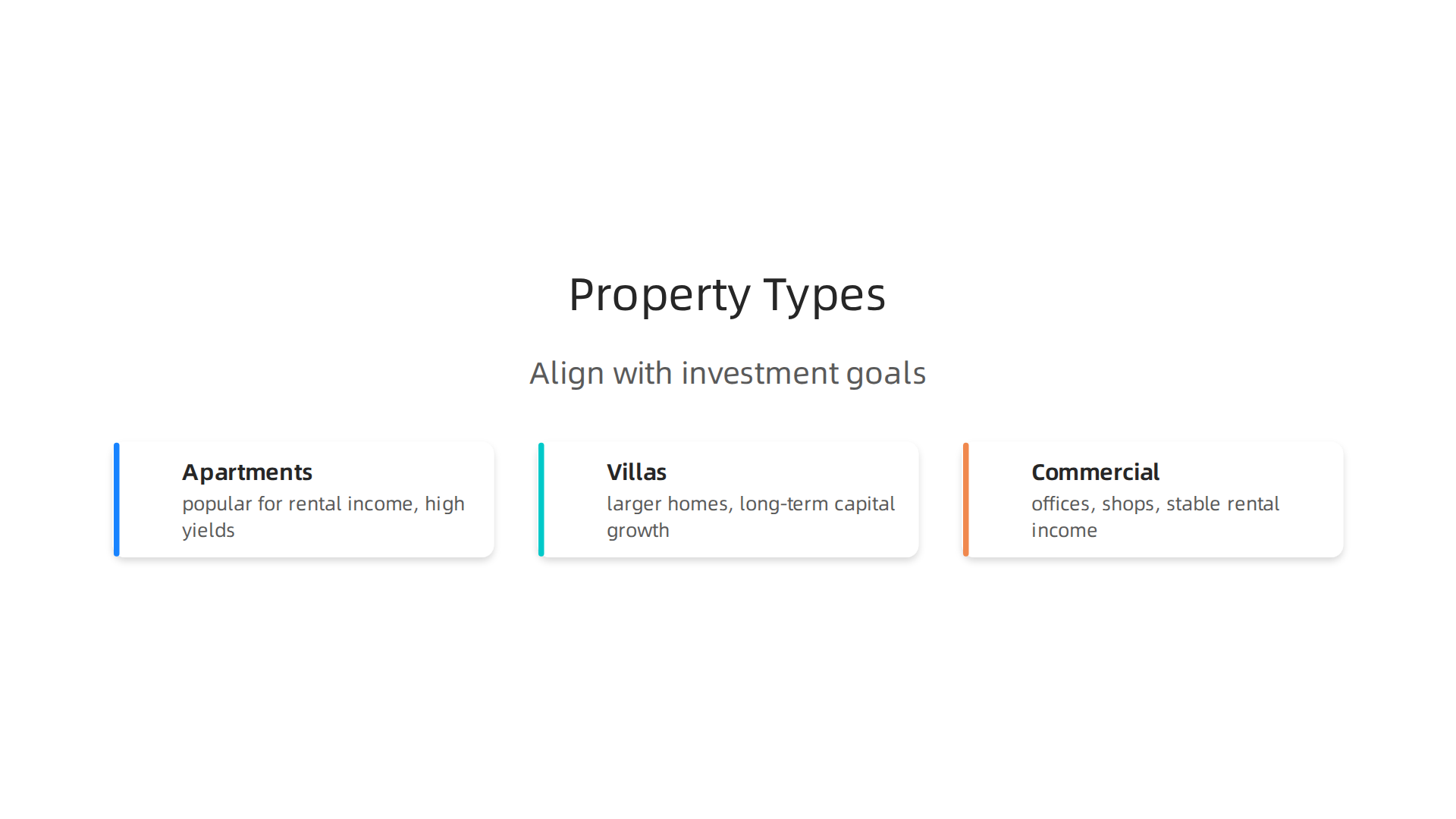
- Apartments: Apartments are very popular for investors who want to earn rental income. In 2026, some areas like International City, Dubai Silicon Oasis, and Jumeirah Village Circle are known for offering high rental yields, sometimes between 7% and 10% Best Areas to Buy Property in Dubai (2026) – Sands Of Wealth. They can be a smart way to invest property, especially if you focus on areas with strong tenant demand.
- Villas: Villas are larger, standalone homes, often preferred by families. While they offer a different lifestyle and can appreciate in value, their rental yields are typically a bit lower than apartments. They might be a good choice if you are looking for long-term capital growth or if you plan to live in the property yourself.
- Commercial Real Estate Dubai: This includes offices, shops, warehouses, or other spaces for businesses. Investing in commercial real estate Dubai can be a great option if you understand the business market and want to rent out spaces to companies. It can offer stable, long-term rental income, but it also often requires a larger investment and different knowledge than residential property.
Aligning your choice with your investment goals is key. If your main goal is long-term growth and you have patience, off-plan properties might be a good fit. If you need immediate income and less waiting, ready properties could be better. For a deeper dive into strategies, explore our guide on investment in Dubai Real Estate 2026 market trends and winning strategies. No matter which type you choose, understanding the market and getting expert advice is crucial for success in Dubai international real estate.
To make the best choices and ensure you are getting the Best Returns on Investments Dubai 2026 Property Guide, it is always wise to seek expert help.
Considering an investment in Dubai property? Connect with an expert for tailored advice.
FREE Dubai Real Estate Consultation
After you have chosen the right type of property, the next big decision is where to invest property. This is super important because even within Dubai, different neighborhoods can have very different results for your money. Think of Dubai as many small markets, each with its own special qualities. This is what we call "micro-markets."
How to Pick the Best Neighborhoods
To invest in real estate in Dubai wisely, you need to look at a few main things when choosing a neighborhood:
- What People Want to Rent: Some areas are great for people looking for a place to live, which means good rental income for you. For example, in 2026, places like Jumeirah Village Circle (JVC), Dubai Silicon Oasis (DSO), and International City are known for offering high rental earnings for apartments Best Areas to Live in Dubai in 2026.
- How Much Property Value Grows: Other areas might see their property prices go up a lot over time. This is called "capital appreciation." Dubai Hills Estate and Business Bay, for instance, are expected to show strong price growth this year because many people want to live and work there Dubai Communities With the Strongest Price Growth in 2026.
- Things Nearby (Amenities): People like to live near shops, schools, parks, and hospitals. A neighborhood with lots of these helpful places will always be more popular.
- How Easy It Is to Get Around (Transport Links): If an area is close to metro stations or main roads, it’s easier for people to travel to work or other parts of Dubai. This makes it more attractive for renters and buyers.
Reading the Signs in Micro-Markets
To truly understand where to invest in real estate in Dubai, you need to look for local clues. These can tell you if an area is likely to do well:
- New Buildings and Roads (Infrastructure): When the government builds new roads, public transport, or other important structures, it often makes nearby areas more desirable.
- Future Building Plans (Project Pipelines): Look at what new homes or commercial buildings are planned for an area. If many new properties are coming, it might affect how much rent you can charge or how quickly prices go up. Some experts even share videos about Dubai’s Hottest Neighborhoods for 2026 based on these types of developments.
- How Many Homes Are Occupied (Occupancy Rates): If most homes in an area are rented out or lived in, it means there’s high demand. This is a good sign for investors looking to rent out their property. Places like JVC continue to be highly sought after for both investors and those living there Dubai Property Market 2026: Best Areas, Prices & ….
- Rent Changes: Keep an eye on how much rents are changing. Some communities are seeing rents rise faster than property prices, like JVC, JLT, and Dubai Silicon Oasis Dubai Communities Where Rent Is Rising Faster Than …. This can point to strong tenant demand.
Knowing these local details helps you make smart choices in the bigger Dubai international real estate market. It helps you find those hidden gems where your investment can truly shine. To learn more about getting started, check out our guide on smart investments in real estate for beginners in Dubai 2026.
Choosing the right neighborhood is a smart move, but how you pay for your property and what rules you follow are just as important when you want to invest property in Dubai. Let’s look at the money side of things and the important rules you need to know.
4. Financing, Fees and Regulations: mortgages, ownership rules and tax considerations
When you decide to invest in real estate in Dubai, understanding the money part and the legal steps is key. This helps you plan your budget and makes sure your purchase goes smoothly.
How to Finance Your Property
Many people need a loan, or mortgage, to buy property. The good news is that banks in Dubai offer mortgages to different kinds of buyers. This includes people who live in Dubai, people from other countries living there (expats), and even international investors who live outside the UAE. So, whether you are a resident or a non-resident, you can usually get a mortgage to help you buy.
Costs You Should Expect
Beyond the price of the property, there are some extra costs you need to know about:
- Dubai Land Department (DLD) Fee: This is a big one. You’ll typically pay 4% of the property’s buying price to the DLD. This fee is for registering your new property.
- Service Charges: After you buy, you’ll pay yearly service charges. These fees cover the cost of maintaining the building or community you live in, like cleaning common areas, security, and repairs. Before you buy, it’s wise to check for any unpaid service charges from the previous owner to avoid surprises UAE Real Estate Due Diligence: What Buyers Check in 2026.
Ownership Rules and What You Need to Know
Dubai has clear rules about who can own property and where. This makes it easier for people from all over the world to invest in real estate in Dubai.
- Freehold Areas for Foreigners: Actually, foreigners can buy property in Dubai with full ownership, but only in special areas called "freehold zones." These include popular spots like Dubai Marina, Downtown Dubai, and Palm Jumeirah [Dubai: Property Foreign Ownership Today (2026)]. This means you can own your apartment or villa completely, and you don’t even need a special visa to buy property. However, owning property can help you get a Golden Visa, which offers longer residency in Dubai [Can Foreigners Buy Property in Dubai 2026? Full Guide – Pearlshire].
- No Property Tax: A great benefit of investing in Dubai is that there is no yearly property tax on real estate. This can help you save a lot of money over time.
Important Legal Steps and Checks
To make sure your investment is safe, you need to follow some important legal steps and do your homework:
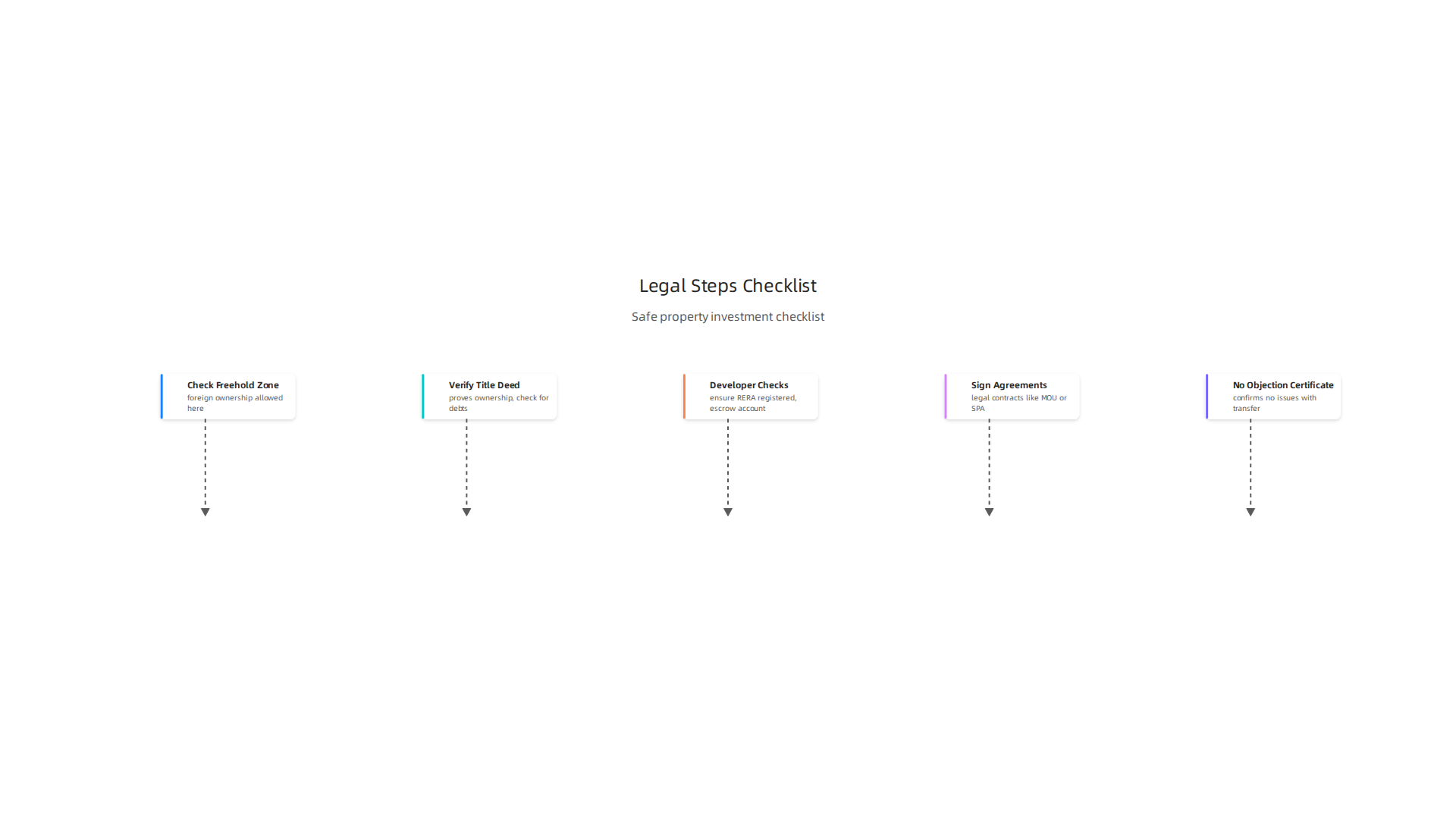
- Check the Freehold Zone: First, make sure the property you want to buy is truly in a designated freehold area where foreign ownership is allowed [Buying Property in Dubai as a Foreigner (2026): Freehold Zones …].
- Verify the Title Deed: This document proves who owns the property. You must check that the title deed is real and matches the seller’s identity. You can also use the Dubai REST app to check it [Dubai Property Due Diligence Checklist 2026]. Your legal helper can also do an official search at the DLD to confirm the owner and check for any existing mortgages [Legal Due Diligence When Buying Property in the UAE].
- Developer and Project Checks (for new homes): If you’re buying a property that isn’t built yet (called "off-plan"), it’s very important to check that the developer is registered with RERA (Real Estate Regulatory Agency). Also, make sure the project has a special "escrow account" where your payments go. This account protects your money and ensures it’s only used for building the property [The Dubai Investment Security & Due Diligence Guide].
- Sign Agreements: You’ll sign important papers like a Memorandum of Understanding (MOU) or a Sale and Purchase Agreement (SPA). These are legal contracts.
- No Objection Certificate (NOC): For ready properties, you’ll need a NOC from the developer. This paper confirms that you have paid all your service charges and that there are no problems with transferring ownership [Dubai real estate due diligence checklist: secure your investment].
Understanding these financial and legal parts is crucial for anyone looking to invest in Dubai’s busy international real estate market. It helps you avoid problems and make smart choices. For more detailed information, you can read about 10 UAE property purchase red flags to watch before buying in 2026.
Making a big real estate decision requires careful thought. If you want to make sure you’re on the right track and get advice tailored to your specific needs, talking to an expert can be a great next step.
Buying, selling, renting, or investing in Dubai? Connect with Ayaz Salman for a FREE Dubai Real Estate Consultation.
Making a big real estate decision requires careful thought. If you want to make sure you’re on the right track and get advice tailored to your specific needs, talking to an expert can be a great next step. Just as important as understanding the money and rules is knowing the possible problems and how to get out of your investment when the time comes. This is called risk management and exit strategies.
5. Risk Management and Exit Strategies: stress tests, liquidity and contingency plans
When you decide to invest property in Dubai, it is smart to think about what could go wrong and how you might sell your property later. This planning helps protect your money and makes your investment stronger.
Finding and Fixing Investment Risks
Every investment has some risks. In Dubai international real estate, here are some to watch for:
- Market Downturns: Sometimes, property prices can go down instead of up. This means your property might be worth less than you paid for it. To lower this risk, you can look for strong areas or properties that tend to hold their value better. It is also good to understand how different events can affect property prices, like learning about Dubai Property Bubble Risk in 2026.
- Tenant Voids: If you buy a property to rent it out, there might be times when you don’t have a tenant. This means no rental income coming in. You can reduce this risk by buying in popular areas with high demand for renters or by having some savings to cover costs during empty periods. Ready properties, which you can rent out right away, offer immediate rental income, typically 5-8% for apartments in Q2 2026, which can help avoid these gaps Dubai Real Estate Market Report: Q2 2026.
- Developer Risk (for new homes): If you invest in an "off-plan" property (one that is not built yet), there is a chance the developer might delay the project or face problems. While Dubai has rules to protect buyers, choosing a trusted developer with a good track record is key. Off-plan properties often promise higher growth in value as they are being built, but ready properties give you income right away and more certainty Off-Plan vs Ready Property in Dubai | 2026 ROI.
Your Plan to Leave (Exit Strategies)
An exit strategy is simply your plan for how you will eventually sell or otherwise end your investment. Thinking about this early can help you make better choices now.
- Holding for the Long Term: Many investors choose to keep their property for many years. This allows them to benefit from steady rental income and the property’s value growing over time. This approach can be a good way for Maximizing Long-Term Dubai Real Estate Investments 2026.
- Refinancing: If you have a loan on your property, you might be able to get a new loan with better terms or take out some of your equity (the part of the property you own outright). This can give you cash for other goals without selling the property.
- Staged Sale: If you own several properties or a very large one, you might sell them one by one over time. This lets you react to the market as it changes.
- Lease-to-Own Options: You could rent your property to someone with an agreement that they can buy it from you later. This can give you a steady income while you wait for the right buyer.
No matter your strategy, it is important to know your options. This helps you react well to different market conditions, whether the market is booming or slowing down. Planning ahead helps you invest in real estate in Dubai with more peace of mind.
Are you buying, selling, renting, or investing in Dubai? Connect with Ayaz Salman for a FREE Dubai Real Estate Consultation.
When you decide to invest property, it is really important to look at the numbers closely. Just like knowing the risks, understanding how much money your property can make is key. This means figuring out things like rental income, how much you paid, and if the property’s value might grow.
6. How to Analyze a Deal: cap rates, yields, cash flow and scenario modelling
To be smart when you invest in real estate in Dubai, you need to check a few important financial details. This helps you know if a property is a good buy and how much money it might bring in.
Understanding Rental Yield
Rental yield helps you see how much money you can expect to earn from rent compared to how much the property cost you. It’s a simple way to compare different properties.
Here is how you figure it out:
- Find your yearly rent income. This is all the money you get from tenants in one year.
- Divide that by the property’s purchase price.
- Multiply by 100 to get a percentage.
For example, if a property costs AED 1,000,000 and you expect to get AED 70,000 in rent each year, your rental yield is 7%. In 2026, apartments in Dubai typically offer around a 7% rental yield on average, while ready properties generally give higher yields compared to off-plan ones, with ready apartments showing gross yields of 6.5–8.5% Off Plan vs Ready Property in Dubai: Which Is the Better Investment in 2026? and Dubai Off-Plan vs Ready Properties: Complete 2025–2026 Buyer’s …. This is a good way to see your immediate return from tenants.
Capitalization Rate (Cap Rate)
A cap rate is like the rental yield, but it’s used more for bigger, commercial real estate Dubai deals. It shows the expected rate of return on a property.
Here is how it works:
- Find your Net Operating Income (NOI). This is your total rent money minus all your running costs, but not counting loan payments or taxes.
- Divide your NOI by the property’s current market value.
- Multiply by 100 for a percentage.
A higher cap rate means you might get your money back faster, but it also depends on the risks involved.
Cash Flow: Money In, Money Out
Cash flow is simply the money left over after all bills are paid each month or year. It’s your rental income minus all expenses, including:
- Loan payments (if you have a mortgage)
- Service charges
- Maintenance costs
- Insurance
- Any times the property is empty
Positive cash flow means you have extra money each month. Negative cash flow means you are losing money, and you would need to cover it from your own pocket. When you invest property, good cash flow helps keep your investment steady.
Cash-on-Cash Return
This calculation helps you see the return on the actual cash money you put into the investment, not the total price of the property.
Here’s how to calculate it:
- Find your yearly cash flow.
- Divide that by the total cash you actually put in. This includes your down payment, closing costs, and any money you spent to fix up the property.
- Multiply by 100 for a percentage.
This number shows you how well your actual out-of-pocket money is working for you.
Expected Property Value Growth (Appreciation Scenarios)
Besides rent, your property’s value can grow over time. This is called capital appreciation. To think about this, you can look at past trends and expert predictions for Dubai international real estate.
For example, some areas might see faster growth than others. In 2026, while prices for some residential properties saw a brief dip of 4-7% from February to April, the market is expected to grow between 5% and 8% overall Dubai’s residential prices fell 4-7% during the Feb-April 2026 and Will Dubai Property Prices Rise or Fall in 2026? Market …. Keeping an eye on these forecasts helps you estimate future gains. If you want to dive deeper into smart investment strategies, check out these smart investments in real estate for beginners in Dubai 2026.
Building "What If" Plans (Scenario Modeling)
It’s smart to think about different futures. What if rent prices go up or down? What if your property stays empty for longer than you thought? This is called scenario modeling or sensitivity analysis.
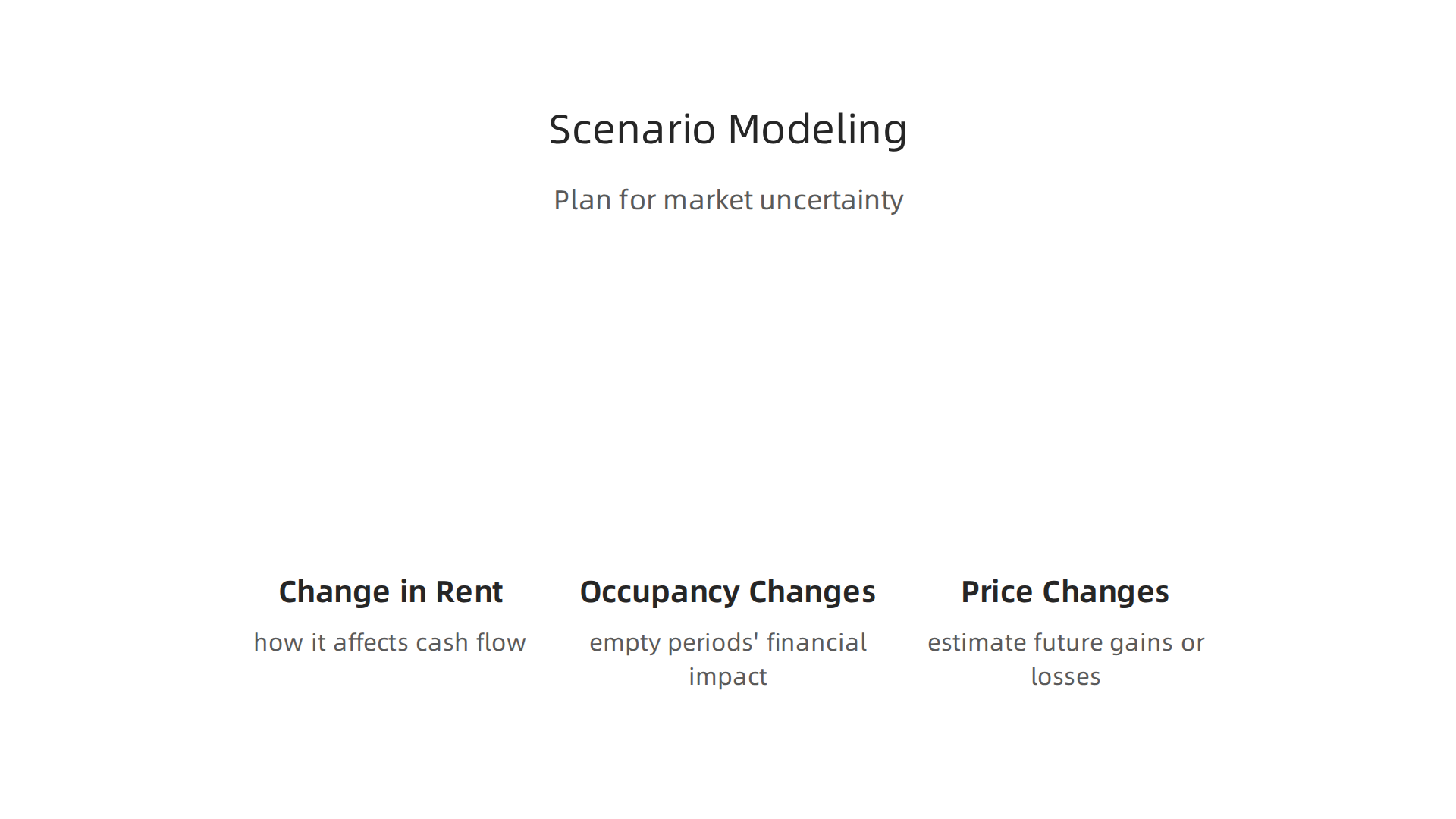
You can try out different numbers:
- Change in Rent: What if your rent goes down by 5%? How does that affect your cash flow and yield?
- Occupancy Changes: What if you have a tenant only 9 months out of 12 instead of 11?
- Price Changes: What if the property’s value only grows by 3% a year instead of 7%?
By changing these numbers, you can see how strong your investment really is and prepare for different situations. This way, you can invest in real estate in Dubai with more confidence, knowing you have thought through many possibilities.
When you decide to invest property, it’s not just about looking at numbers. It’s also super important to get the right help and check everything carefully. This means picking good helpers and making sure the property itself is exactly what it seems.
7. Working with Agents, Due Diligence and Closing Checklist
To successfully invest in real estate in Dubai, you need trustworthy people by your side and a clear plan to check everything.

This helps you avoid problems and make a safe deal.
Picking the Best Agents and Developers
Think of your real estate agent as your guide. A good agent will:
- Know a lot about the Dubai market.
- Have experience helping buyers like you.
- Be licensed by RERA (Real Estate Regulatory Agency), which means they follow the rules.
- Listen to your needs and find properties that fit.
It is smart to choose a skilled real estate consultant Dubai to help you through the process.
When it comes to developers, especially if you’re buying a new property, you want to know they are reliable. Check these things:
- Past Projects: Have they finished other buildings on time and well?
- RERA Registration: Are they properly registered with RERA? This is a must for any developer in Dubai.
- Escrow Accounts: For new properties (off-plan), make sure your money goes into a special escrow account. This account is managed by the government to keep your funds safe until construction milestones are met. You can learn more about how to verify real estate companies Dubai for secure property deals.
Watch Out for Red Flags
When you invest in real estate in Dubai, be careful during talks. Some signs that something might be wrong include:
- Pressure to Buy Fast: If an agent or seller pushes you to make a quick decision without time to think.
- Unclear Paperwork: If the documents are confusing or the seller does not want to give you all the papers you ask for.
- Demanding Cash Payments Only: Be wary if they insist on only cash and avoid official bank transfers.
These could be some of the 10 UAE property purchase red flags to watch out for.
Your Due Diligence Checklist
Due diligence means doing your homework before you buy. It’s a careful check of everything about the property to make sure there are no hidden problems. Here is a simple checklist:
1. Legal Checks
- Freehold Status: For foreign buyers, it’s very important to confirm the property is in a designated freehold area. This means you can own it completely. In 2026, foreigners can buy property with full ownership in these special zones without needing a residency visa for Dubai international real estate purchases, as highlighted in guides on buying property in Dubai as a foreigner.
- Title Deed: This is the official paper that proves who owns the property. You need to verify the title deed through the Dubai Land Department (DLD) or its app, Dubai REST. Make sure the seller’s name matches and that there are no old mortgages or debts on the property.
- No Objection Certificate (NOC): The developer or master developer must give a NOC. This paper says they have no problem with the property being sold and that all service charges are paid up.
- Expert Legal Help: It’s smart to have legal experts look over all the contracts. They can help you understand the small details and make sure your purchase is safe. This is where real estate legal services become very valuable.
2. Financial Checks
- Service Charges: Ask for the last three years of service charge statements. Make sure all past bills are paid and understand how much you will pay each year for maintaining common areas.
- Escrow Account (for Off-Plan): If you are buying a property that is still being built, ensure your payments go into a RERA-approved escrow account. This protects your money.
3. Operational Checks
- Property Condition: If buying a ready property, walk through it carefully. Look for any damage or things that might need fixing.
- Existing Contracts: Find out if there are any current tenants or rental agreements you need to know about.
Closing the Deal
After doing all your checks and making an offer, you’ll sign an official agreement, like a Memorandum of Understanding (MOU) or a Sale and Purchase Agreement (SPA). Then, you will pay the DLD registration fee (usually 4% of the property price) and finally get your title deed.
Taking these steps ensures you properly invest property and make a confident choice when you decide to invest in real estate in Dubai.
Buying, selling, renting, or investing in Dubai? Connect with Ayaz Salman for Free Consultation.
FREE Dubai Real Estate Consultation
Summary
This article is a practical guide to investing in Dubai real estate in 2026, summarising market conditions, investment choices and the steps needed to buy safely. It explains the current rebalancing of prices—short‑term softening in some areas but overall year‑on‑year gains—and why fundamentals like tourism, population growth and business expansion keep demand strong. You’ll learn the differences between off‑plan and ready properties, which property types and neighbourhoods tend to deliver rental income or capital growth, and how to choose between apartments, villas and commercial assets. The guide covers financing options, typical fees (including the 4% DLD charge), freehold rules for foreign buyers, and legal checks such as title deeds and escrow accounts. It also walks through risk management, exit strategies, and the financial metrics (rental yield, cap rate, cash‑on‑cash) needed to evaluate deals. Finally, it lists due diligence steps, red flags to avoid, and when to get expert help so you can invest with more confidence.