

10 Real Estate Investing Dubai Tips for 2026 Backed by Market Data
Overview
Introduction
Dubai’s property market is getting a lot of attention from investors around the world in 2026. And it is not hard to see why. The numbers tell a clear story. In 2025 alone, the emirate recorded over 270,000 real estate transactions worth nearly AED 917 billion. That represents roughly 20% year-on-year growth, reflecting strong demand from both local and international buyers.
According to a detailed Dubai housing market 2026 outlook, the market is entering a more balanced phase. After rapid price increases between 2021 and 2024, growth is now supported by population increases and long-term residents rather than short-term speculation.
But here is the thing. With so much information flying around, it can feel overwhelming to know where to start. Should you look at off-plan investments or focus on ready properties? Are villas a better bet than apartments? How do you pick the right neighborhood?
That is where this guide comes in.
We put together ten actionable angles for real estate investing in Dubai based on current market data and expert insights.

These tips for real estate investing will help you cut through the noise and match your strategy with your financial goals. Whether you are a first-time buyer or an experienced investor, understanding the different options available makes all the difference. For a closer look at pricing trends across different segments, check out this data-driven guide for investors and buyers.
Now let us dive into the ten evidence-backed angles that can help you make confident decisions this year. And if you want personalized advice tailored to your situation, feel free to connect with Ayaz Salman for a free consultation.
Off-Plan Properties: High Reward with Calculated Risk
One of the most popular ways to enter the Dubai property market is through off-plan investments.
This means buying a property from a developer before construction is finished. In 2026, off-plan sales still make up a huge part of the market, often accounting for over 70% of all residential transactions. The appeal is clear.
Why investors go off-plan
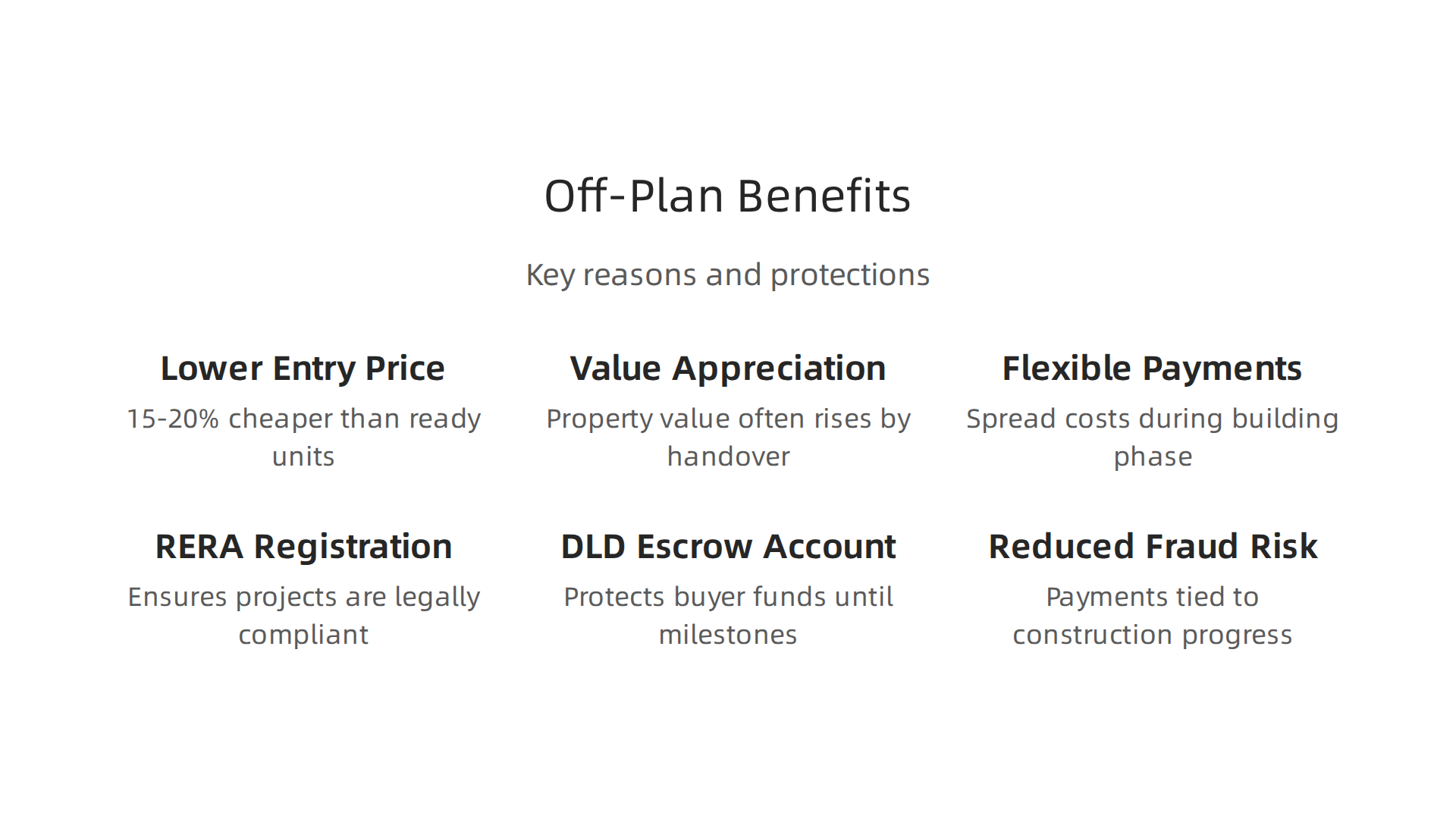
The biggest draw is the lower entry price. Off-plan properties are typically 15-20% cheaper than ready units in the same area, according to market data. As construction moves forward, the value of your property often rises. Many investors see nice gains by the time they get the keys. Plus, developers offer flexible payment plans that let you spread out costs during the building phase.
Safety nets you need to know
Dubai has strong rules to protect off-plan buyers. The Real Estate Regulatory Authority (RERA) makes sure all projects are registered. Your payments go into a DLD escrow account, which means the developer can only access the money after reaching certain milestones. This setup lowers the chance of losing your funds if something goes wrong. For a deeper look at how to evaluate different off-plan opportunities, check out this guide on investments with best roi in dubai 2026 off plan rentals and luxury properties.
Risks to watch out for
No investment is risk-free. With off-plan, the main concerns are project delays, market shifts during construction, and the finished product not matching what was promised. That is why doing your homework matters so much. You should always check the builder’s track record, look at realistic handover dates, and plan your budget for extra costs like registration fees.
A balanced approach
Off-plan investing in Dubai can deliver strong returns, but it is not a gamble you should take lightly. Stick with reputable developers, use the protections already in place, and only invest money you can keep locked up for a couple of years. If you understand the risks and do your due diligence, this can be a solid part of your overall real estate investing Dubai strategy.
Buy-to-Let: Maximizing Rental Yields in Dubai’s Strong Market
Now let’s talk about the strategy that generates steady monthly income: buy to let. If you are looking for real estate investing Dubai, you cannot ignore buy to let.

The city consistently offers some of the highest rental yields globally.
Many areas give you returns between 5% and 9% per year. That is much better than what you get in most major cities around the world.
Where the best yields live
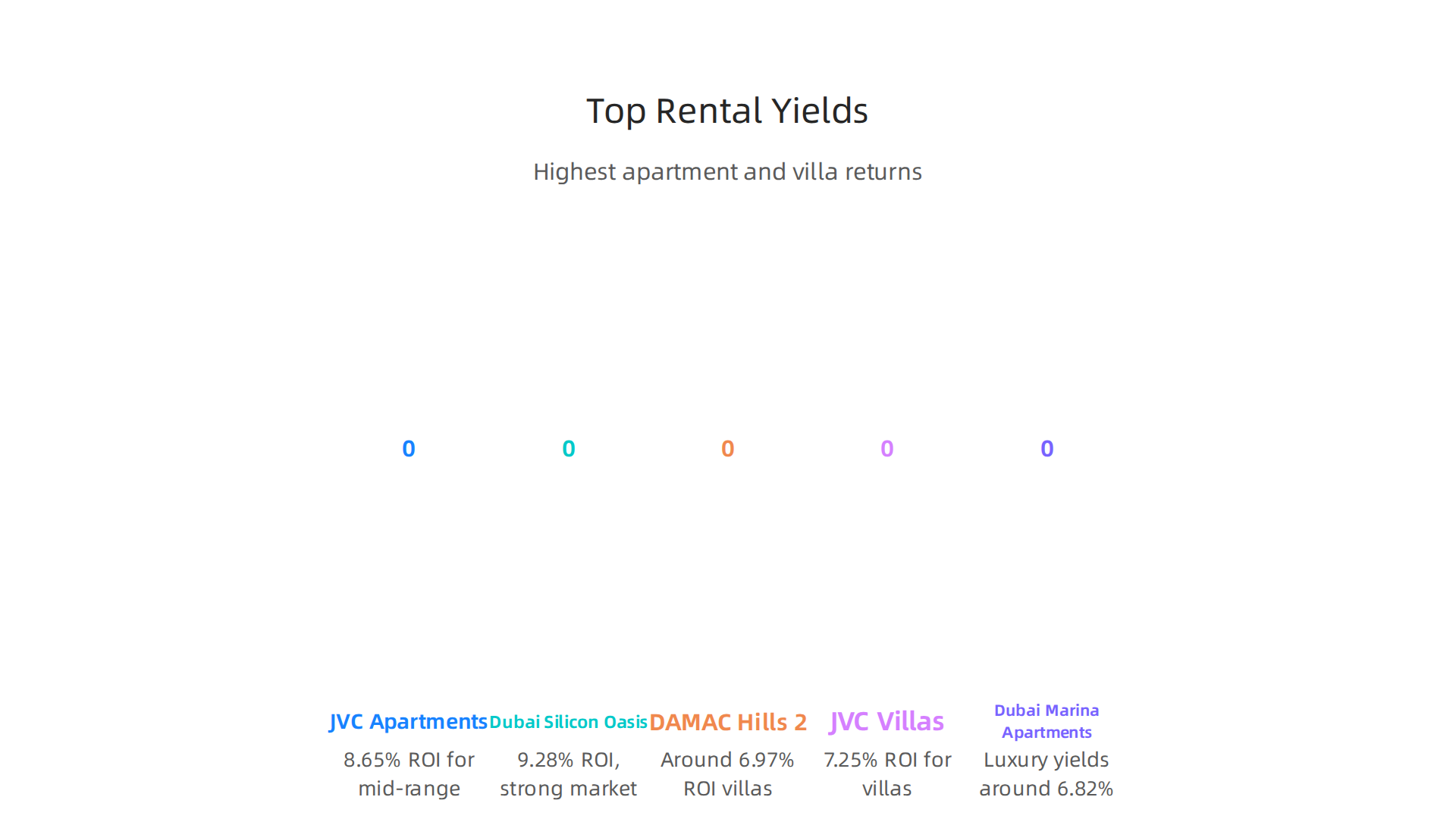
Location is everything. Areas like Jumeirah Village Circle (JVC) and Dubai Production City stand out for apartments. According to data on rental yields in Dubai areas, JVC offers an 8.65% ROI for mid-range apartments. Dubai Silicon Oasis delivers an even stronger 9.28% ROI. For villas, DAMAC Hills 2 gives around 6.97% ROI, while JVC villas reach 7.25%. Dubai Marina remains a classic choice with luxury apartment yields around 6.82%. These numbers show why buy to let is a core part of any smart real estate investment tips plan.
Stable cash flow from long term tenants
The beauty of buy to let is the reliable monthly rent. Long term tenants stay for one year or more. This gives you predictable income that covers your mortgage fees and leaves you profit. Recent tenancy law updates in Dubai have strengthened landlord rights too. You now have clearer rules for security deposits, rent increases, and eviction procedures. That makes managing a rental property much less stressful.
Don’t forget property management
Choosing the right area is only half the battle. You also need good property management. A local manager handles maintenance, tenant screening, and rent collection. This is especially important if you live outside Dubai. Professional management helps you maximize your returns without daily headaches. For more ideas on how to build a solid buy to let portfolio, check out this guide on best returns on investments in Dubai 2026.
If you are serious about real estate investing Dubai and want personalized advice on finding the right rental property, you can connect with a local expert. Get your FREE Dubai Real Estate Consultation by reaching out to Ayaz Salman directly. He can help you choose the perfect area and property for strong rental income.
Capital Appreciation Plays: Identifying Emerging Growth Areas
Buy to let gives you monthly income, but what if you want your property’s value to grow over time? That is capital appreciation, and it is a powerful part of real estate investing Dubai. Some areas are poised for strong price growth because of new infrastructure and government plans.
You just need to know where to look.
Three areas with serious potential
Dubai South is one of the most promising growth zones. It sits near the new Al Maktoum International Airport and the Expo City district. As the airport expands, demand for housing in this area will rise. Expo City itself is turning into a mixed use community with offices, parks, and homes. Then there is Dubai Creek Harbour. This waterfront development aims to rival Dubai Marina. It includes parks, shops, and the Creek Tower. These areas are still in their early stages, which means prices are lower today than they will likely be in a few years.
What drives value growth
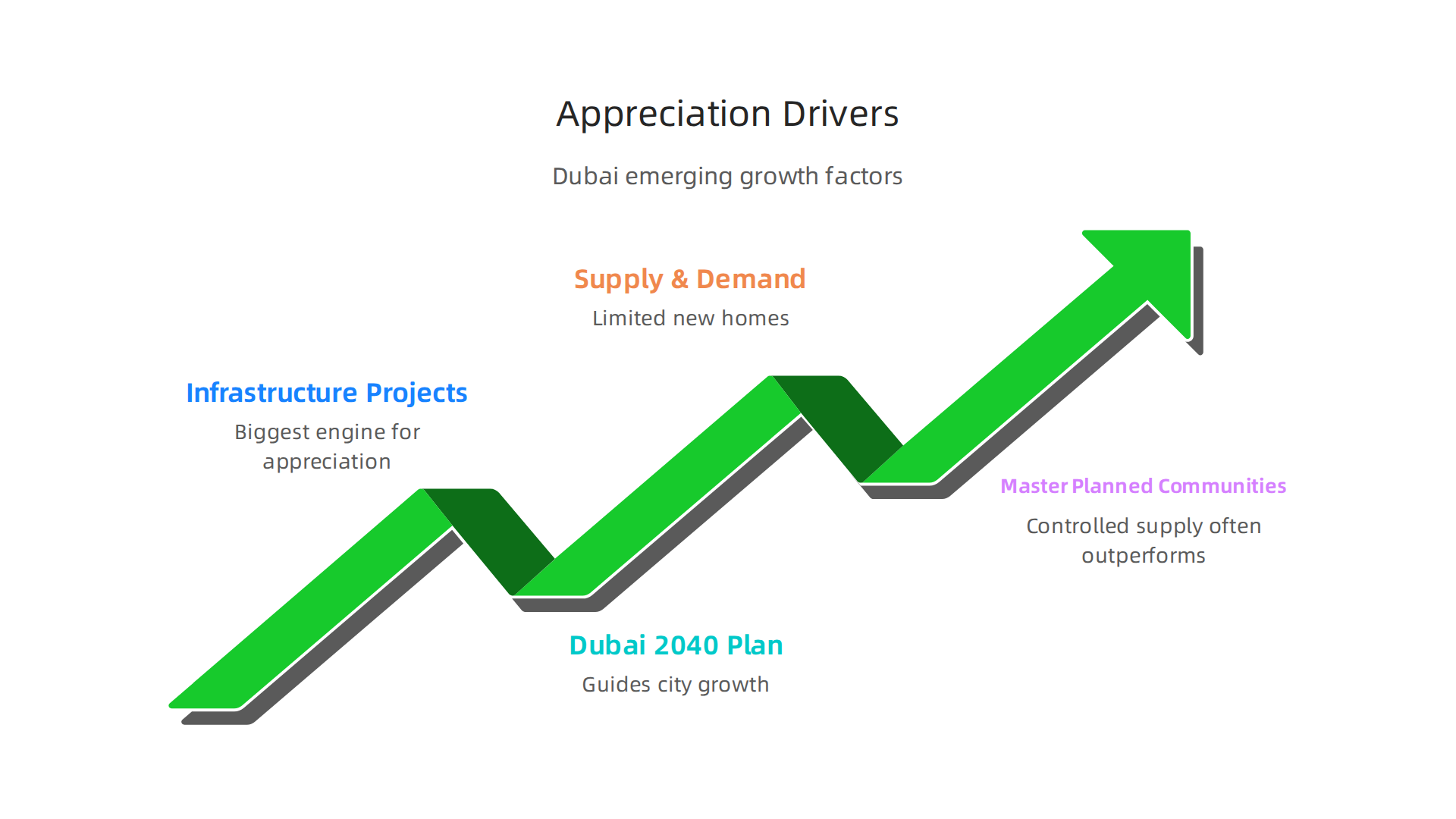
Infrastructure projects are the biggest engine for appreciation. The Dubai 2040 Urban Master Plan guides where the city grows. It focuses on five main urban centers and improving transport. According to the latest insights on the Dubai real estate forecast 2026, these planning priorities will shape where demand concentrates. Areas that get new metro lines, roads, or schools will see property values climb faster than others.
Supply and demand matter too. If a neighborhood has limited new homes but lots of people wanting to live there, prices go up. That is why master planned communities with controlled supply often outperform. For a deeper look at how these factors play out, read this analysis on long term real estate investment in Dubai for 2026.
My advice for you
Do not chase the hottest area today. Look for places where infrastructure is coming but not finished yet. That is where the biggest gains hide. If you want help identifying the next growth pocket, consider speaking with a local expert who knows the market inside out. They can point you to areas that match your timeline and budget.
Luxury Real Estate: Targeting High-Net-Worth Investors
Have you ever wondered where the world’s wealthy put their money in Dubai? The luxury segment is a magnet for global high-net-worth investors, and for good reason. Ultra-prime properties on Palm Jumeirah, Emirates Hills, and in new branded residences offer more than just stunning views. They provide a safe haven for capital with strong rental yields and steady appreciation.
Why does luxury real estate in Dubai work so well? Exclusive communities like these have limited supply. You cannot build more land on the Palm. That scarcity helps protect your investment. At the same time, demand from wealthy buyers keeps rising. The result is stable value growth that often outpaces the broader market.
If you are a foreign buyer, understanding the rules is key. You can buy freehold property in designated areas like Palm Jumeirah and Emirates Hills with full ownership rights. You also become eligible for a golden visa if your property is worth at least AED 2 million. According to a guide on legal steps to buying property in Dubai for foreigners, the process is straightforward once you pick a freehold zone and verify the developer. The golden visa gives you long-term residency, which makes owning a second home or investment property even more attractive.
For a closer look at one of the most prestigious communities, check out this guide on Emirates Hills villas for sale in 2026. It breaks down pricing, market trends, and what makes that area unique.
If you are serious about buying luxury property in Dubai, you want expert advice that matches your goals. Get a free consultation with Ayaz Salman to talk about your options. He can help you find the right property and navigate the buying process from start to finish.
Commercial Real Estate: Offices, Warehouses, and Retail Spaces
While luxury homes grab the spotlight, commercial real estate offers another smart path for your portfolio. If you are exploring real estate investing Dubai, offices, warehouses, and retail spaces can deliver higher returns than residential properties. The trick is knowing where to look.
Dubai South is a major logistics hub, and free zones like DIFC and DMCC attract global businesses. Grade A offices in these areas have near full occupancy, with rents climbing 12–18% in 2026. According to the UAE Commercial Real Estate Market Size & Share Analysis, the sector is worth over USD 53 billion and growing at 6.33% annually.

That kind of steady growth is hard to find in many other markets.
E-commerce is also changing the game. Warehousing and industrial spaces are in high demand because more people shop online. Vacancy rates sit near 95%, and industrial rents have jumped 18–20%. For investors, these assets often yield 7% or higher. That beats the 5–7% you typically see on residential apartments.
Flexible office spaces are another trend. Businesses want short-term leases and modern, tech-ready buildings. Areas like Business Bay and DIFC are leading this shift. If you want solid real estate investment tips, focus on commercial properties in these high-growth zones.
For a deeper look at how to pick the best properties, check out this data-driven guide for investors and buyers. It breaks down the numbers for 2026.
If you are ready to explore commercial opportunities in Dubai, expert advice can save you time. Get a free consultation with Ayaz Salman to discuss your options and find the right investment for your goals.
Fractional Ownership and REITs: Lower Barriers to Entry
Not everyone has hundreds of thousands of dollars to buy a whole apartment or villa in Dubai. That is a common hurdle for people interested in real estate investing Dubai. But there are two smart ways to get in with much less money: fractional ownership and Real Estate Investment Trusts (REITs).
Fractional ownership lets you buy a share of a prime property. You and other investors split the cost and share the rental income and any price gains. Platforms make this easy, and you can start with a much smaller amount. The Dubai Land Department supports this model, and recent rule changes make it even more attractive. As of 2026, the updated property investor visa rules allow joint owners to qualify for a two-year residence visa if each person owns a minimum share of AED 400,000. That means fractional ownership can open the door to both property investment and residency.
REITs are another excellent option. These are companies that own and operate income-producing real estate. You buy shares on a stock exchange, just like buying stock in a company. In Dubai, Emirates REIT is a well-known example. It owns commercial properties and pays dividends to shareholders. REITs give you liquidity you can buy and sell shares easily. They also offer diversification because one REIT may own many different properties.
Both fractional ownership and REITs are regulated by the Dubai Financial Services Authority (DFSA) within the Dubai International Financial Centre (DIFC). This gives you strong investor protection and clear rules. For anyone looking for real estate investment tips, these low-barrier options are worth exploring.
If you want to build a steady portfolio without buying a whole property, check out this long-term real estate investment in Dubai strategy. It covers the best approaches for growing your wealth over time.
When people think about real estate investing Dubai, one strategy stands out for quick income: short-term rentals. Dubai welcomes millions of tourists every year. Events like the Dubai Shopping Festival, New Year celebrations, and global business conferences bring a steady flow of visitors. Those travelers need places to stay, and many prefer apartments and villas over hotels.
Short-term rentals through platforms like Airbnb and Booking.com can earn higher nightly rates than long-term leases.

During peak seasons, some properties see occupancy rates above 90%. That translates to strong returns.
But here’s the thing. This is not a wild west market anymore. The Department of Tourism and Commerce Marketing (DTCM) and the Real Estate Regulatory Authority (RERA) have clear rules. You need a holiday home license to operate a short-term rental legally. You also need to follow safety and quality standards. Fines for operating without a license are real and can hurt your bottom line.
Location matters a lot for this strategy. Areas near Dubai Mall, Dubai Marina, and major tourist attractions command the highest nightly rates. For example, studios in Downtown Dubai offer some of the best rental yields in the city, with average returns around 7 to 8% in 2026 according to the latest data on best rental yields in Dubai 2026 from GuestReady. Dubai Marina also performs well, especially for smaller apartments.
If you are looking for tips for real estate investing in the short-term rental space, focus on properties near tourist hotspots. Furnish them well. Keep them clean. Respond fast to guest messages. Great reviews lead to more bookings and higher rates.
For a closer look at which property types and locations deliver the strongest returns, this guide on investments with best ROI in Dubai 2026 covers off-plan options, rentals, and luxury properties that work well for active investors.
Short-term rentals let you tap into Dubai’s tourism boom without needing a whole portfolio of properties. But you need to follow the rules and pick the right locations to make it work.
Thinking about getting started with a short-term rental in Dubai? You can get a FREE Dubai Real Estate Consultation by connecting with Ayaz Salman. He can help you understand licensing, pick the right area, and set up your property for success.
DLD-Registered Developments: Trust and Security
When you explore off-plan properties in Dubai, one question should be at the top of your mind: Is this project registered with the Dubai Land Department (DLD)?
DLD-registered developments offer a layer of trust and security that unregistered projects simply cannot match. For anyone serious about real estate investing in Dubai, understanding this safeguard is a crucial tip for real estate investing in the off-plan space.
Why does DLD registration matter so much? Projects registered with the Dubai Land Department must follow strict rules set by the Real Estate Regulatory Authority (RERA). This includes using an escrow account to protect your money. Your payments go into a secure account that the developer can only access after meeting specific construction milestones. This system drastically cuts the risk of fraud and project abandonment. According to the 10 Benefits of Buying Off-Plan Property in Dubai from Engel & Völkers, these measures "enhance the safety and transparency of off-plan investments in Dubai and give both local and international buyers greater confidence."
Another key tool is the Oqood system. Oqood is an online registration system that records the sale of off-plan units. It caps early resales of off-plan properties, which helps stabilize the market. Without Oqood, speculators could flip units multiple times before construction finishes, driving up prices artificially. By limiting this, the DLD keeps the off-plan market healthier and more predictable for genuine investors.
When you choose a DLD-registered project, you also get more transparency. The developer’s track record, payment plan, and handover timeline are all on record. You can verify everything before you commit. This is one of the most important tips for real estate investing in Dubai, especially for off plan investments.
For a deeper look at what to watch out for, read our guide on 10 UAE property purchase red flags to watch before buying in 2026. It covers common scams and warning signs that even experienced investors miss.
By sticking with DLD-registered developments, you protect your capital and set yourself up for a smoother investment journey. The rules are there to help you. Use them.
Distressed and Flipping Properties: Opportunistic Investing
Economic ups and downs happen in every market, and the Dubai real estate market is no exception. But here’s the thing: smart investors know that downturns often hide the best deals. When a developer runs into cash flow trouble or a property owner needs to sell fast, prices can drop below true market value. That’s where opportunistic investors step in.
Buying distressed properties means you get a discount upfront. Your job is to add value through renovation or repositioning, then sell at a profit.

This strategy is called flipping, and it can work well in Dubai if you handle the math carefully.
The key to successful flipping is controlling renovation costs. Before you buy, get real quotes from contractors. Know exactly what the repairs will cost. Also, understand what today’s buyers want in 2026. Open floor plans, smart home features, and energy-efficient upgrades are in high demand. If you spend money on the wrong finishes, you may not get your investment back.
Location matters even more for flips. Areas going through gentrification offer shorter holding periods and faster resale. Neighborhoods like Al Furjan and Jumeirah Village Circle (JVC) are great examples. Both areas are attracting new residents and businesses, which pushes property values up. A well-flipped unit in one of these spots can sell quickly.
For a deeper look at which Dubai communities are gaining value, check out our Dubai property investment 2026 guide. It breaks down which areas offer the best returns for 2026.
Distressed and flipping strategies fit well into a broader real estate investing Dubai plan. They let you capture value that other investors miss. But you need discipline, accurate cost estimates, and a clear exit plan. The market in 2026 still has plenty of these opportunities if you know where to look. According to the Dubai Real Estate Trends 2026 overview, off-plan properties and undervalued assets continue to provide strong entry points for those ready to act.
If you’d like personalized advice on finding distressed deals or planning a flip, you can get a FREE Dubai Real Estate Consultation. Ayaz Salman can help you evaluate properties and create a strategy that fits your goals. No pressure, just expert guidance.
Future-Proof Investments: Sustainability and Smart Homes
Here is another shift happening right now in real estate investing Dubai. Tenants and buyers in 2026 are not just looking for a good location. They want homes that save energy, use less water, and come with smart technology built in. This trend is not a passing fad. It is becoming a standard expectation.
Properties with green certifications like Estidama or LEED often sell for higher prices. These labels prove the building meets strict environmental standards. For you as an investor, this means a certified property can attract premium renters who are willing to pay more. According to the latest forecasts, the market is moving toward a more sustainable growth path where quality and efficiency matter more than ever. The Dubai Housing Market 2026 report confirms that demand from long-term residents and end-users is driving this change.
Dubai’s Net Zero 2050 strategy is another big reason to pay attention. The government is pushing developers to build greener communities. New projects must meet higher environmental standards. This means older buildings without these features could lose value over time. By choosing a forward-looking property now, you position yourself ahead of the curve.
Smart home features also play a huge role. Things like automated lighting, smart thermostats, and keyless entry systems are not just cool gadgets. They reduce utility bills and make daily life easier. For a landlord, a smart apartment stands out in a crowded rental market. It commands higher rent and attracts tech-savvy tenants who stay longer.
For a deeper look at how to build a lasting portfolio with these principles, check out our long-term real estate investment in Dubai guide. It walks you through strategies for steady growth in this changing market.
When you combine green building standards with smart technology, you create a property that is built to last. This is one of the smartest real estate investment tips for 2026. It protects your investment against future regulatory changes and shifting buyer preferences. The best part is that these upgrades add real value without requiring a complete renovation. Start by looking for developments from reputable builders who already include these features as standard. That is a solid foundation for any tips for real estate investing today.
Summary
This guide lays out ten practical investment angles for Dubai real estate in 2026, helping buyers and investors cut through market noise and choose the right strategy. It covers the pros and cons of off-plan purchases, buy-to-let rental strategies, capital appreciation hotspots, luxury and commercial opportunities, fractional ownership and REITs, short-term rentals, DLD protections, distressed flips, and future-proofing through sustainability and smart-home features. The article explains why Dubai remains attractive—strong transaction volumes, rising population-driven demand, high rental yields (often 5–9%), and clear regulatory protections like escrow accounts and Oqood registration. It gives specific location examples (JVC, Dubai Silicon Oasis, Dubai South, Dubai Creek Harbour, Palm Jumeirah) and practical rules of thumb (off-plan discounts, yield ranges, visa thresholds). Readers will learn how to match a strategy to their timeline and budget, which risks to watch, and how to use local experts and registered tools to protect capital. The piece also points to resources for deeper analysis and offers a free consultation option for tailored advice.