
Market Analysis for Business Plan in Dubai Expert Strategies for Investors
Overview
Why a solid market analysis matters for your Dubai business plan
Starting a new business or making a big real estate investment in Dubai needs careful thought. It’s a busy place with lots of chances, but also lots of competition. This is why having a strong market analysis for business plan is not just a good idea, it’s a must. Imagine trying to build something without knowing where to put it or what materials you’ll need. That’s a bit like starting a business without understanding the market first.
Many people find it hard to get good, up-to-date information about commercial properties and the business world in Dubai. There’s a lot of data out there, but knowing which parts are true and helpful can be tough. Business owners and investors need clear, reliable facts to decide where to set up shop, how much money to ask for, and what kind of space will work best. Without this, you might pick a bad spot or ask for the wrong amount of money.
Actually, the UAE Commercial Real Estate Market is very big, worth about $53.77 billion in 2026 and growing steadily. This shows how important it is to know what’s happening. The Dubai Land Department also reported that commercial property sales grew a lot in 2025, which means there’s a lot of movement in the market. Knowing these kinds of trends is key for any market analysis in business plan. You can learn more about these trends in an Investing in Commercial Property Dubai: A 2026 Market Analysis report.

A good market analysis for business plan helps you see the full picture. It shows you who your customers are, what your competitors are doing, and what parts of the market are growing or shrinking.

It’s like having a map and compass before you start a long journey. This way, you can make smart choices about things like financing your business or picking the perfect location for your new venture in Dubai. If you are planning for the long term, understanding these details is crucial for Long Term Real Estate Investment in Dubai Your 2026 Strategy for Steady Growth.
This guide is here to help you. We will walk you through a clear way to do a market analysis for business plan that is perfect for Dubai. You can use this plan to make sure your business choices are based on solid facts, helping you avoid common problems and move forward with confidence.
Buying, selling, renting, or investing in Dubai? You can get clear, direct advice. Connect with Ayaz Salman for a FREE Dubai Real Estate Consultation.
Now that we know why a market analysis for business plan is so important, let’s look at what’s really happening in Dubai’s business world this year, 2026. Knowing the big picture helps you make smart choices for your real estate investment in Dubai.
1. Dubai commercial market overview: macro drivers and current trajectory (2026 lens)
Dubai’s business market is always moving and growing. It’s like a big engine with many parts working together. To understand it, we need to look at the main things that make it strong and what’s being built.
Big reasons why Dubai’s market is strong
Several key things keep Dubai’s commercial market busy:
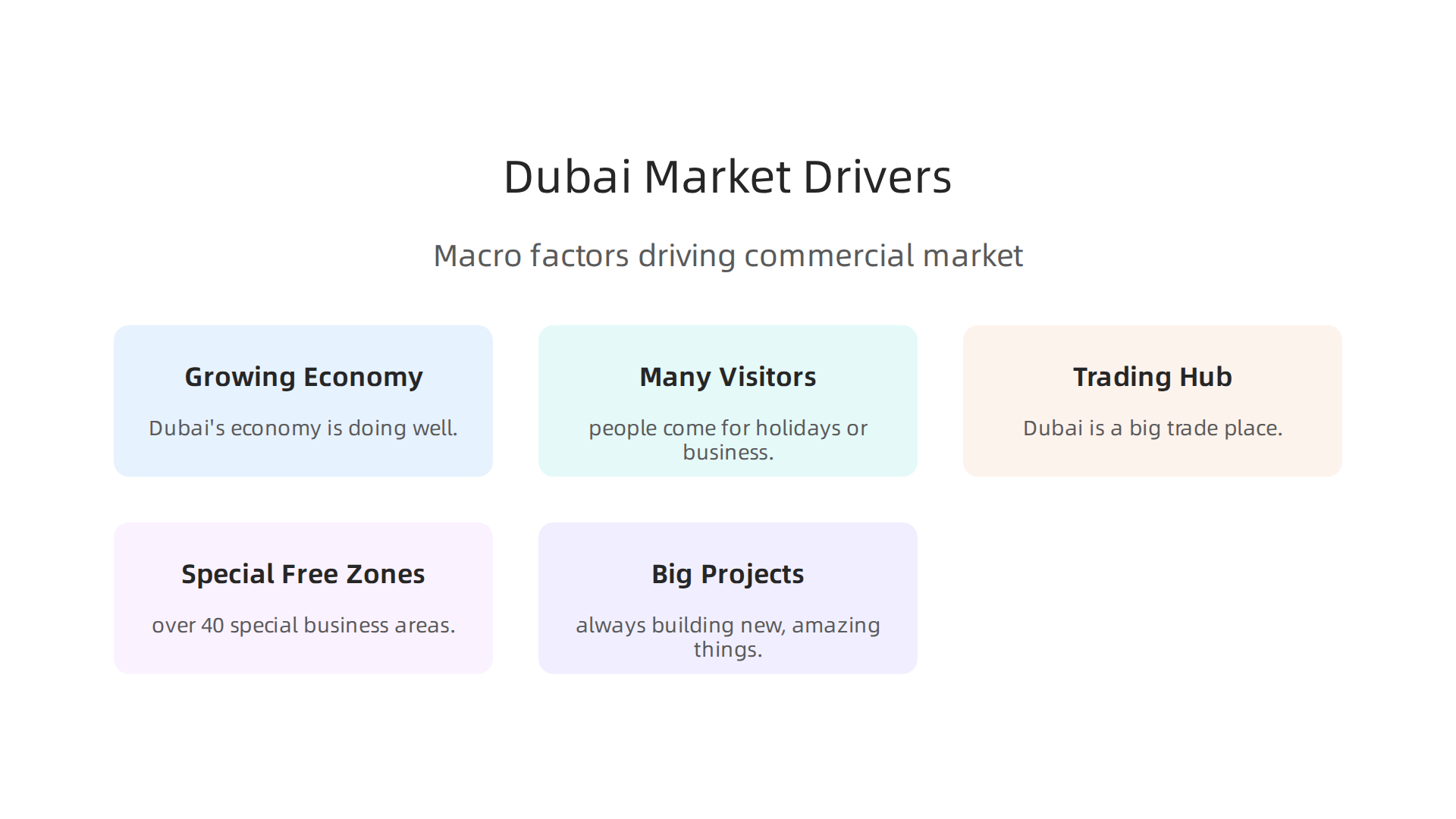
- Growing Economy: Dubai’s economy is doing well. This means more businesses want to open, which leads to a higher need for office spaces, shops, and warehouses. A healthy economy makes people feel good about putting their money into businesses and properties here.
- Lots of Visitors: Many people come to Dubai for holidays or business. This makes hotels, restaurants, and shops very busy. More tourists mean more need for places for them to stay, eat, and buy things. This directly boosts the demand for commercial property.
- Important Trading Hub: Dubai is a big place for trade, connecting East and West. This means there’s a constant need for places to store goods, like warehouses and logistics centers. Being a trading hotspot makes the industrial property market strong.
- Special Business Areas: Dubai has over 40 special business areas called "Free Zones." In these zones, foreign business owners can own their companies fully, which is a big draw. These areas are magnets for new businesses, creating high demand for commercial spaces within them. You can learn more about these special zones from the Free Zones | Ministry of Economy & Tourism – UAE website.
- Big Building Projects: Dubai is always building new and amazing things. Think about new roads, metro lines, and even whole new neighborhoods. These big projects make areas more popular and easier to get to, which boosts property values. For instance, the Dubai 2040 Urban Master Plan is guiding how the city will grow for the next 20 years, focusing on making life better for everyone. Such infrastructure plans definitely affect where businesses choose to set up, as shown in reports about How Dubai Infrastructure Projects Are Driving Property Values in 2026.
What’s being built and how fast things are moving
Looking at what’s being built helps us understand the supply side of the market analysis in business plan.
- New Buildings Coming Soon: In 2026, many new commercial buildings are being finished, and more are planned. These are called "off-plan" projects. They include new offices, retail centers, and industrial parks. Knowing about these new spaces helps you see if there will be enough room for everyone, or if there might be too much. You can often find details about future projects and investment tips in resources like the Dubai Holding Real Estate Guide 2026.
- How Quickly Spaces Get Taken: We also need to look at how fast businesses are renting or buying these new spaces. This is called "absorption." For example, a recent Dubai Commercial Market Report – January 2026 shows how quickly offices, shops, and storage places are being filled. If spaces are filling up fast, it means the market is strong. If they stay empty for a long time, it might mean there’s too much supply or not enough demand.
- Offices: Many companies want modern offices.
- Retail: Shopping areas continue to attract new brands.
- Industrial/Logistics: With more online shopping and trade, warehouses are always in demand.
Understanding these trends is super important for anyone looking into Investments with Best ROI in Dubai 2026.
By putting all this information together in your market analysis for business plan, you get a clear picture of Dubai’s commercial market in 2026. This helps you make smart choices for your business, whether you’re looking for a new office, a shop, or a place to store your goods. It also helps if you’re thinking about a job in dubai real estate, as understanding these market drivers is key for success.
To make smart decisions for your business, just understanding the big market picture isn’t enough. You also need to dig into the numbers. A strong market analysis for business plan uses important calculations to show if your idea for real estate investment in Dubai makes good sense. These numbers help you see how much money you might make and what risks are involved.

Let’s look at the main numbers you need for your business plan and how to figure them out.
Key metrics to include in a business plan and how to calculate them
When you put together a market analysis in business plan, you need to show clear financial numbers. These are the main measurements that tell investors and lenders if your property idea is a good one. Here are the most important ones:
1. Gross and Net Rental Yield
Rental yield tells you how much money you make from rent compared to the property’s cost.
- Gross Rental Yield: This is the simple version. It looks at all the rent you get before you pay any bills.
- How to calculate: (Total Yearly Rent / Property Purchase Price) x 100
- Example: If you buy a shop for AED 1,000,000 and it rents for AED 100,000 per year, your gross yield is (100,000 / 1,000,000) x 100 = 10%.
- Net Rental Yield: This is more accurate. It looks at your rent money after you pay for things like upkeep, taxes, and other costs.
- How to calculate: ((Total Yearly Rent – Yearly Expenses) / Property Purchase Price) x 100
- Example: If that same shop has AED 20,000 in yearly expenses, your net yield is ((100,000 – 20,000) / 1,000,000) x 100 = 8%.
2. Vacancy Rate
The vacancy rate shows how much of your property is empty, or not rented out. Even if a property is usually full, it’s smart to plan for some empty time. Experts often suggest planning for 5% to 10% vacancy for stable properties in their financial models, as noted in resources about Underwriting in a Commercial Real Estate Investment.
- How to calculate: (Number of Empty Units or Square Feet / Total Number of Units or Square Feet) x 100
- Example: If you have an office building with 10 units and 1 is empty, your vacancy rate is (1 / 10) x 100 = 10%.
3. Net Operating Income (NOI)
NOI is a very important number. It tells you how much money your property makes from its operations before you pay for loans or taxes. This number is key for seeing how well a property performs. You can learn more about important metrics for underwriting commercial real estate from Key Metrics for Commercial Real Estate Underwriting.
- How to calculate: Gross Rental Income – Operating Expenses (like property management, insurance, repairs, property taxes, but not loan payments or income tax).
- Example: If your building brings in AED 500,000 in rent and has AED 150,000 in operating expenses, your NOI is AED 350,000.
4. Capitalization Rate (Cap Rate)
The cap rate helps you quickly compare different properties. It shows the expected rate of return on a property if you bought it all with cash. It’s often used to figure out a property’s value. The higher the cap rate, the more income the property is expected to generate for its price. This is a primary tool for commercial real estate professionals, as detailed in articles like The Cap Rate: What You Should Know.
- How to calculate: Net Operating Income (NOI) / Property’s Current Market Value
- Example: If a building has an NOI of AED 350,000 and its value is AED 5,000,000, the cap rate is (350,000 / 5,000,000) = 0.07 or 7%. A guide on Multifamily Cap Rates: Your 2026 Investor’s Guide also highlights its importance for investors.
5. Break-Even Occupancy
This tells you how full your property needs to be just to cover all its costs. If you rent out offices, it’s the point where the income from rented spaces exactly matches all your expenses.
- How to calculate: (Fixed Costs / (Rent Per Unit – Variable Costs Per Unit))
- Example: If your fixed costs (like property taxes and insurance) are AED 100,000, and each office unit rents for AED 10,000 with AED 1,000 in variable costs (like cleaning per tenant), you need to rent (100,000 / (10,000 – 1,000)) = 11.11 units to break even. So, 12 units would get you past that point.
Presenting Your Numbers to Lenders and Investors
When you show your market analysis for business plan to people who might give you money, they want to see numbers that are real and careful.
- Conservative Estimates: Lenders and investors usually prefer estimates that are a little cautious. This means it’s better to guess slightly lower rental income and slightly higher expenses, so they know you’ve thought about potential problems.
- Sensitivity Ranges: It’s smart to show what happens if things change a little. For example, what if rent prices drop by 5%? Or what if expenses go up by 10%? Showing these "what if" situations helps them see that you understand the risks and have a plan. This is called a sensitivity analysis. It shows how strong your investment is even if market conditions shift. Understanding how to present these effectively can really help if you’re exploring
long term real estate investment in Dubai.
By providing these key metrics and showing different possibilities, you make your business plan much stronger and more trustworthy. For personalized guidance on your specific property needs or investment goals, you can always connect with an expert.
Buying, selling, renting, or investing in Dubai? Connect with Ayaz Salman for FREE Dubai Real Estate Consultation.
By providing these key metrics and showing different possibilities, you make your business plan much stronger and more trustworthy. For personalized guidance on your specific property needs or investment goals, you can always connect with an expert.
3. Segment analysis: offices, retail, industrial/logistics and hospitality — what matters for your plan
When you do a market analysis for business plan in Dubai, you can’t just look at real estate as one big thing. Different types of properties work in different ways. What matters for an office building is not the same as what matters for a shop or a hotel. To really understand your real estate investment in Dubai, you need to look at each specific part of the market. Let’s break down the main types of commercial properties.
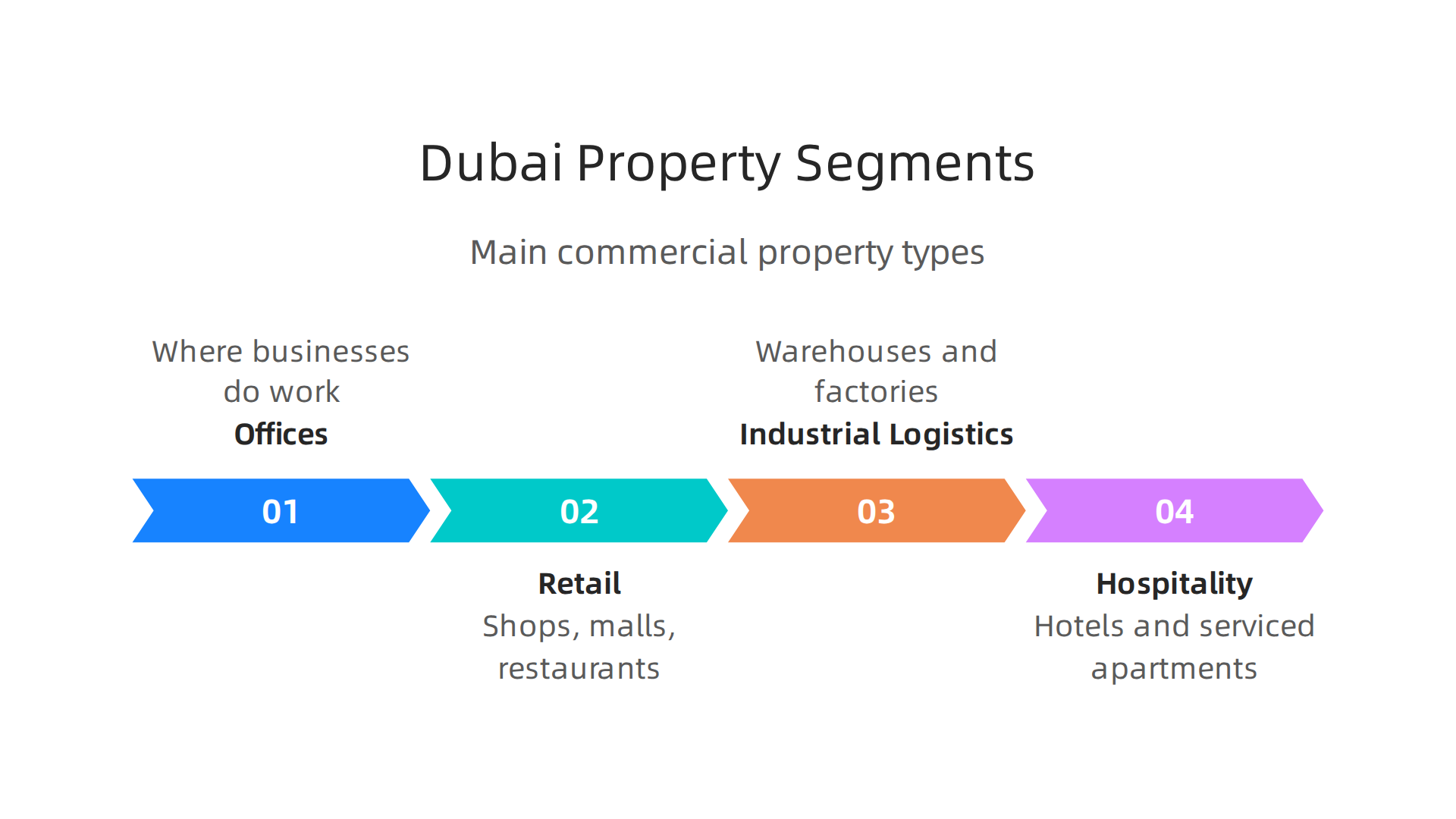
Offices
Office spaces are where businesses do their work. In Dubai, the office market has been strong. For example, reports show that Dubai’s office market started 2026 well because more businesses are setting up here and investors are still keen to put money into it, as noted by Cavendish Maxwell market reports.
- What makes them popular? Many new businesses starting up, companies growing, and Dubai being a good place for international trade. For instance, the first quarter of 2026 saw sustained performance in Dubai’s office market, especially in prime areas, according to a 1Q26 Dubai Office Market Report.
- How do leases work? Usually, long-term leases (3 to 5 years or more). Rent can be based on square feet or per workstation.
- Who rents them? Big international companies, local businesses, startups, and government offices.
- Key numbers to watch: Vacancy rates (how many offices are empty), average rent per square foot, and how many new office buildings are being built.
Retail
Retail properties are places like shops, malls, and restaurants. These depend a lot on how many people live and visit Dubai and how much money they spend.
- What makes them popular? A growing population, many tourists visiting Dubai, and people having more money to spend. The Dubai retail market started 2026 on its strongest note since 2017, with the Retail Price Index climbing, according to the Dubai Retail Market Report Q1 2026.
- How do leases work? Often 1 to 5-year leases. Sometimes, rent includes a base amount plus a percentage of the store’s sales.
- Who rents them? Fashion brands, food and drink outlets, supermarkets, and entertainment businesses.
- Key numbers to watch: Foot traffic (how many people walk past or into a store), sales per square foot, and vacancy rates in shopping areas.
Industrial/Logistics
These are warehouses, factories, and distribution centers. They are very important for moving goods and making products.
- What makes them popular? Dubai’s role as a global trade hub, the growth of online shopping (which needs big warehouses), and better ways to transport goods.
- How do leases work? Usually longer-term leases (5 to 10 years) because businesses need stability for their operations.
- Who rents them? Shipping companies, e-commerce businesses, manufacturers, and logistics providers.
- Key numbers to watch: Rental rates per square foot, how quickly goods can be moved, and how close they are to ports or airports.
Hospitality
Hospitality properties are hotels, resorts, and serviced apartments. They rely heavily on tourism and business travel.
- What makes them popular? Dubai is a top tourist spot. It hosts many events and conferences. The UAE’s hospitality market grew a lot in 2025 and into early 2026, with Dubai seeing a record number of visitors, as per the UAE Real Estate Market Review Q1 2026.
The market size is expected to keep growing significantly, reaching USD 30.07 billion in 2026, as highlighted in a report on the Hospitality Industry in UAE.
- How do leases work? Often managed by hotel operators under management agreements or longer-term leases for serviced apartments.
- Who rents them? Tourists, business travelers, and people looking for short-term stays.
- Key numbers to watch: Occupancy rate (how full the hotel is), average daily rate (how much a room costs per night), and revenue per available room (RevPAR).
Choosing Your Comps and Benchmarks
To make your market analysis in business plan strong, you need to compare your property idea to similar ones. These are called "comparable properties" or "comps."
- How to pick comps: Look for properties that are similar in size, age, location, and quality. If you’re looking at a Grade A office in Downtown Dubai, don’t compare it to an older office in a different area.
- Using benchmarks: Once you have your comps, find out their rents, vacancy rates, and sale prices. This helps you set realistic expectations for your own property. For instance, reports like the Dubai Commercial Market Report – January 2026 can give you general trends and benchmarks for office, retail, and logistics in Dubai.
Understanding these different segments and how to compare them will help you make a much smarter market analysis for business plan for your real estate investment in Dubai. This also helps you understand how a specific property might fit into a larger investment plan, like a Long Term Real Estate Investment in Dubai.
To make your market analysis for business plan even sharper for your real estate investment in Dubai, you need to think about where your property is. Location is often the most important thing that drives how much a property is worth and how much money it can make. A great property in a bad spot might not do well, while an average property in a prime spot can be a goldmine.
4. Choosing the right location: a decision framework for site selection
Picking the right location for your real estate investment in Dubai is a big decision. It affects everything from how many customers you get to how much rent you can charge. Here is a simple checklist to help you choose wisely:
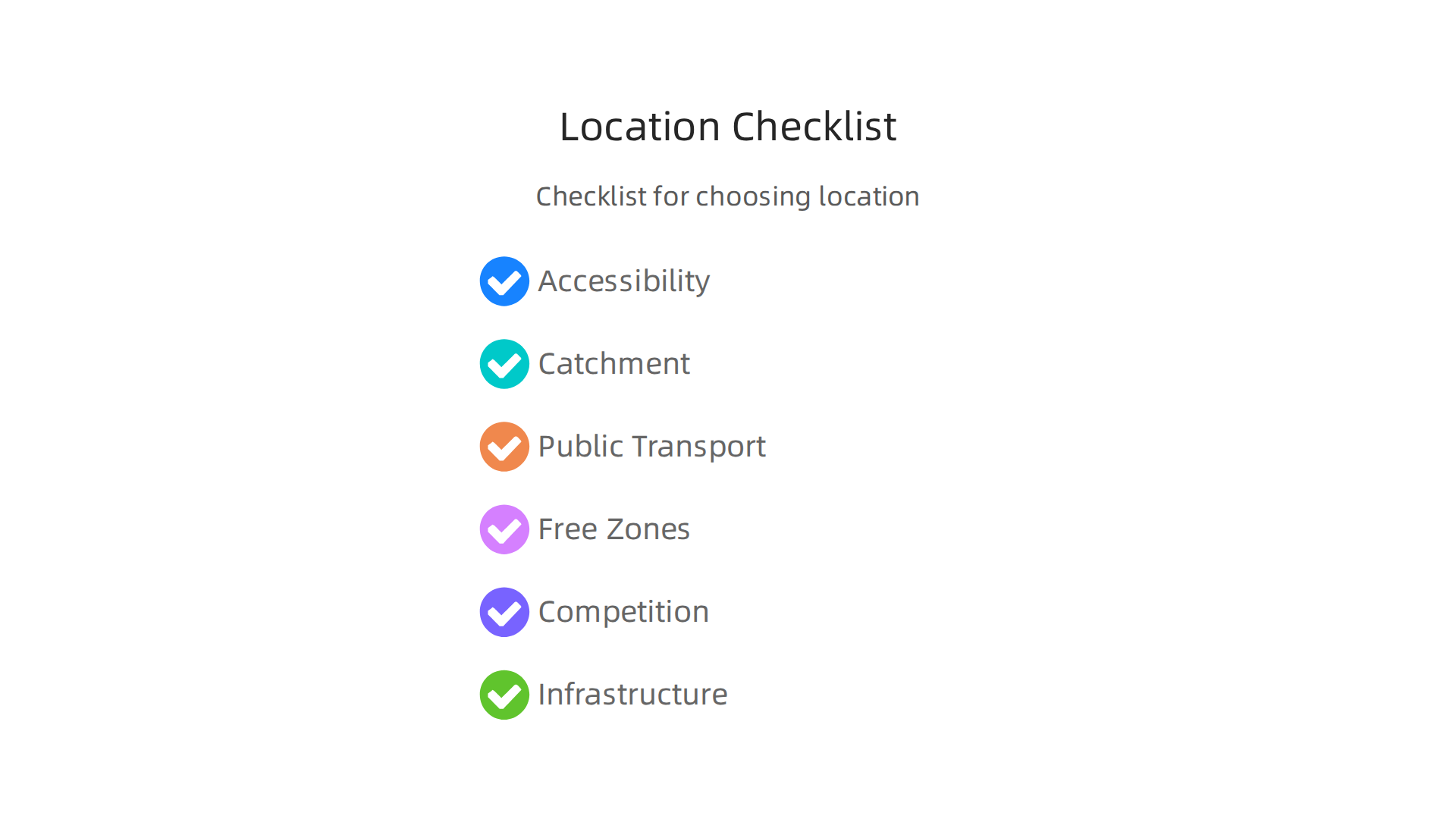
- How easy is it to get there (Accessibility)? Think about roads and highways. Is the property easy for people to drive to? Good access means more visitors for retail or easier transport for industrial properties.
- Who is your client or employee base (Catchment)? For offices or retail, who are the people living or working nearby? Are they your target customers or potential employees? For example, if you’re opening a fancy restaurant, you’d want to be near wealthy neighborhoods.
- Is there public transport nearby? Dubai has a great Metro system and bus network. Properties close to public transport, especially Metro stations, can be much more valuable. Reports show that properties within 500 meters of a Dubai Metro station can see prices 22-30% higher, showing the value of such connections UAE’s World-Class Infrastructure: How It Boosts Property Values.
- Are there special rules (Free Zones)? Dubai has many Free Zones that offer benefits like 100% foreign ownership and tax breaks. If your business or your tenants’ businesses fit a Free Zone, being inside one can be a huge advantage. You can find out more about these special areas from the Ministry of Economy & Tourism – UAE.
- What competition is nearby? Look at other similar properties in the area. Are there many empty shops if you’re planning a retail space? Or too many offices already available? Understanding your competition helps you set the right prices.
- What future plans are there for the area (Infrastructure)? Dubai is always growing and improving. New roads, metro lines, or even whole new communities can greatly change property values. The Dubai 2040 Urban Master Plan is a vision for future development, showing where growth is expected Dubai 2040 Urban Master Plan: How it Aims to Enhance Quality of Life. Keeping an eye on these plans can give you an edge. For instance, infrastructure projects are transforming property values across Dubai in 2026 How Dubai Infrastructure Projects Are Driving Property Values in 2026.
How Micro-Location Factors Affect Your Rental Assumptions and Cash Flow
When you look at these small details about a specific location, it really helps you make better guesses for your market analysis in business plan.
- Rental Assumptions: A property with easy access, near a Metro station, and in a busy area can usually charge higher rents. If it’s a shop, more people walking by means more sales, so a tenant will pay more for that spot.
- Cash Flow Forecasts: Higher rents directly mean more income for your
real estate investment in Dubai. But also consider costs. A prime location might have higher property management fees or taxes. Future infrastructure projects could also boost property values and rental income over time, helping your cash flow grow. Understanding these local factors allows you to predict your property’s earnings more accurately and make a strong case in your business plan.
For more insights into making smart investment choices, you might want to explore articles like Investments with Best ROI in Dubai 2026: Off-Plan, Rentals, and Luxury Properties.
Understanding these local factors allows you to predict your property’s earnings more accurately and make a strong case in your business plan. But to truly make your market analysis for business plan complete for your real estate investment in Dubai, you also need to know about the rules and how you’ll pay for everything.
5. Regulatory, leasing and financing considerations to include in the plan
Making a successful real estate investment in Dubai means you need to understand the rules and how you will pay for your property. These parts are very important for your market analysis in business plan.
Rules and Regulations for Your Property
Before you buy or lease any property in Dubai, you must know about the legal stuff. This includes:
- Licensing: For any business operations, you will need the correct licenses. This is not just for your business itself but also for the type of activity you plan to do in your chosen property.
- Tenancy Regulation: If you are leasing a commercial property, there are specific laws about this. For example, for commercial leases in the UAE, you generally need to give three months’ notice if you want to renew or end the lease, according to Real Estate 2026 – UAE. It is important to know your rights and duties as a tenant or landlord. You can learn more about these rules in a legal guide to leasing commercial properties in the UAE.
- Ownership Structures: In Dubai, you can own property in different ways.
- Freehold: This means you own the land and the building completely. You can sell it, lease it, or pass it on to your family. Freehold areas are specific, mainly in certain communities.
- Leasehold: This means you lease the property from the owner for a long time, usually 99 years. You own the right to use the property for that period, but not the land itself.
- Visa and Business Setup: If you are a foreign investor, buying property might help you get a residency visa. Setting up a business in Dubai also involves certain steps, especially if you are looking at commercial leases. Understanding these connections is key for planning your
real estate investment in Dubai. Dubai’s real estate rules are clear and easy to follow, as detailed in the Dubai Real Estate Regulations 2026: Complete Legal Guide.

How to Finance Your Investment
Once you know the rules, you need to figure out how to pay for your property. This is a big part of your market analysis for business plan.
- Financing Options: Most people get a loan from a bank. For commercial properties, banks in the UAE offer different kinds of loans. You’ll need to show a strong
market analysis in business planto get a good loan. - Lender Requirements: Banks will want to see that you can pay back the loan. They will check your credit history and the project’s ability to make money. For commercial property financing in Dubai, investors need to meet specific bank criteria, including minimum down payments. You can read more about how UAE banks support commercial property investment.
- Common Covenants: These are promises you make to the bank when you get a loan. For example, you might promise to keep a certain amount of cash in your business account or not take on too much other debt.
- Presenting Financing in Your Business Plan: In your business plan, you need to clearly state where your money is coming from. This includes how much of your own money you are putting in and how much you are borrowing. You should also show how you plan to pay back the loan, including expected rental income and expenses. The commercial real estate market saw a recovery in new loan volume in 2025, showing banks are actively lending in 2026, as noted in the 2026 commercial real estate outlook.
Navigating the complexities of Dubai real estate requires expert insights. For tailored advice on your property journey, consider a FREE Dubai Real Estate Consultation. If you’re looking for trustworthy companies to help with your property deals, checking how to verify real estate companies Dubai for safe property deals is a smart move.
After you understand the rules and how you can pay for your property, the next step in your market analysis for business plan is to look at what might go wrong. This is called risk assessment and scenario planning. It helps you get ready for different possible futures for your real estate investment in Dubai.
6. Risk assessment and scenario planning: building sensitivity into your projections
Thinking about risks is a smart way to plan for your property. It shows that you have thought about many different things that could happen.

This makes your market analysis in business plan stronger and more reliable for anyone looking at it, like a bank or an investor.
Plan for Different Futures: Three Scenarios
A good way to look at risks is to create three main pictures, or "scenarios," for your property’s future.
- Base Case: This is your most likely future. It’s what you expect to happen based on all your research and current market facts. This is your main prediction for how much money your property will make.
- Pessimistic Case: This shows what might happen if things get a bit tough. What if rents drop, or you have to pay more for repairs? This scenario helps you see the worst-case situation and plan for it.
- Optimistic Case: This is the best possible future. What if the market grows faster than you thought, and you can charge higher rents? This helps you see the full potential of your investment.
By looking at these three cases, you prepare for many outcomes, not just one.
What to Test: Key Changes to Watch
To build these scenarios, you need to think about what parts of your plan could change the most. Here are some key things to "stress-test":
- Rental Income: What if you can’t rent your property for as much as you hoped? Or what if a sudden market change means you have to lower rents?
- Occupancy Rates: This is about how much of the time your property is rented out. What if it sits empty for longer periods? Real estate experts often estimate a stable vacancy rate of 5% to 10% of total rental income to account for this possibility in their plans, as shared by Underwriting in a Commercial Real Estate.
- Capital Expenditures (CapEx): These are big costs for repairs or upgrades. What if you have unexpected problems, like a broken AC system, that cost a lot to fix?
- Interest Rates: If you are borrowing money for your investment, changes in interest rates can make your loan payments much higher. This can really affect how much money you get to keep.
- Property Value Metrics: You might also look at how things like the cap rate change. The cap rate helps you figure out the value of a property based on how much money it makes, as explained in The Cap Rate: What You Should Know. If market conditions change, this rate can change, affecting your property’s worth.
Making Plans and Clear Assumptions
Once you have looked at these different scenarios, you need to turn them into clear plans.
- Contingency Plans: For the pessimistic case, you need backup plans. What will you do if rents fall? Do you have enough savings to cover costs for a few months? This makes sure you’re ready for bumps in the road.
- Clear Assumptions: In your business plan, you must clearly write down all the guesses you made for each scenario. For example, "We assume a 5% increase in rent each year for the optimistic case." This helps investors and banks understand how you got to your numbers.
This careful planning makes your real estate investment in Dubai look much safer and more thought-out. It also helps you spot any 10 UAE Property Purchase Red Flags early on, so you can avoid potential problems before they get too big.
Summary
This article explains why a robust market analysis is essential for any Dubai business plan or commercial real estate investment in 2026. It reviews the macro drivers keeping Dubai’s market active—tourism, trade, free zones and major infrastructure projects—and shows how new supply and absorption trends affect opportunity. The guide walks through the key financial metrics you must calculate (gross/net rental yield, vacancy, NOI, cap rate and break-even occupancy), then breaks down what matters for offices, retail, industrial and hospitality assets. You get a practical site-selection checklist, an overview of regulatory and financing considerations, and a simple three-scenario approach to test risk. After reading, you will be able to build a data-led market analysis, choose locations more confidently, and present conservative, lender-ready projections to investors.