
Smart Investments in Real Estate for Beginners in Dubai 2026
Overview
Quick primer: Why this guide matters for new Dubai property investors
Are you looking to make smart investments in real estate for beginners? Dubai might just be the perfect place for you to start in 2026.

This city in the UAE is known for its tall buildings and busy lifestyle. But it’s also a top spot for people who want to buy property. Many new investors choose Dubai because it’s easy to access the market, there’s a lot of demand for rentals, and the rules are clear.
One big reason people look to Dubai is the money you can make from renting out properties. As of mid-2026, the average gross residential rental yields are quite good, sitting at about 6.58%. Apartments, for example, often bring in around 6.9% Dubai Housing Market 2026: Mid-Year Review & Outlook. This makes Dubai one of the best long-term investments you can consider. Also, a lot of people move to Dubai for work and need places to live, keeping rental demand high. The government also has clear rules for property, which helps make buying and selling safer for everyone, especially for investments in real estate for beginners.
This guide is made just for you. It will help you learn all about the different type of real estate investments you can make in Dubai. We will cover:
- What kinds of properties you can buy.
- Simple plans for new investors.
- The costs you should expect.
- A step-by-step checklist to follow.
Our goal is to give you the best investments for starters, helping you feel sure about your choices in Dubai’s busy market. For a deeper look into the market, explore our guide on investment in Dubai real estate 2026 market trends.
If you’re ready to take the next step and talk about your property plans, we can help. Get a FREE Dubai Real Estate Consultation with an expert today.
1) Dubai market snapshot for beginners: demand, supply and where returns come from
The big question for new investors is often, "What makes Dubai such a good place to put my money?" It is not just about tall buildings. It is about how many people want to live and work here, and how much property is available. This balance of demand and supply is key to understanding why investments in real estate for beginners in Dubai can be so strong.
What Drives Demand in Dubai?
Many things bring people to Dubai, making the demand for homes and offices high:
- More People Moving In: Dubai is a big draw for people from all over the world who come for work and a great lifestyle. The city’s population keeps growing, and all these new residents need places to live.
- Tourism Boom: Dubai is a top travel spot. Millions of tourists visit each year, filling hotels and needing short-term rentals. This also means more businesses open, which need office spaces.
- Big Projects and Economy: The government keeps launching new plans to make Dubai even better, like the Dubai Economic Agenda D33. These plans bring new jobs and businesses, attracting more people and making the city’s economy stronger.
All these factors mean that there are many people looking for a place to rent or buy. This high demand is good news for property owners, as it helps keep rental income steady and property values going up.
How Supply Meets Demand
Dubai’s building industry is always active, with new homes and towers being built. This helps make sure there is enough property for everyone who wants to live or invest here. The city plans carefully to make sure new buildings add to the market in a good way, keeping things balanced. When demand stays strong and supply grows wisely, it creates a healthy market for all types of real estate investments.
Key Ways You Make Money in Dubai Real Estate
For investments in real estate for beginners, it is helpful to know how you earn money from your property. Here are the three main ways:
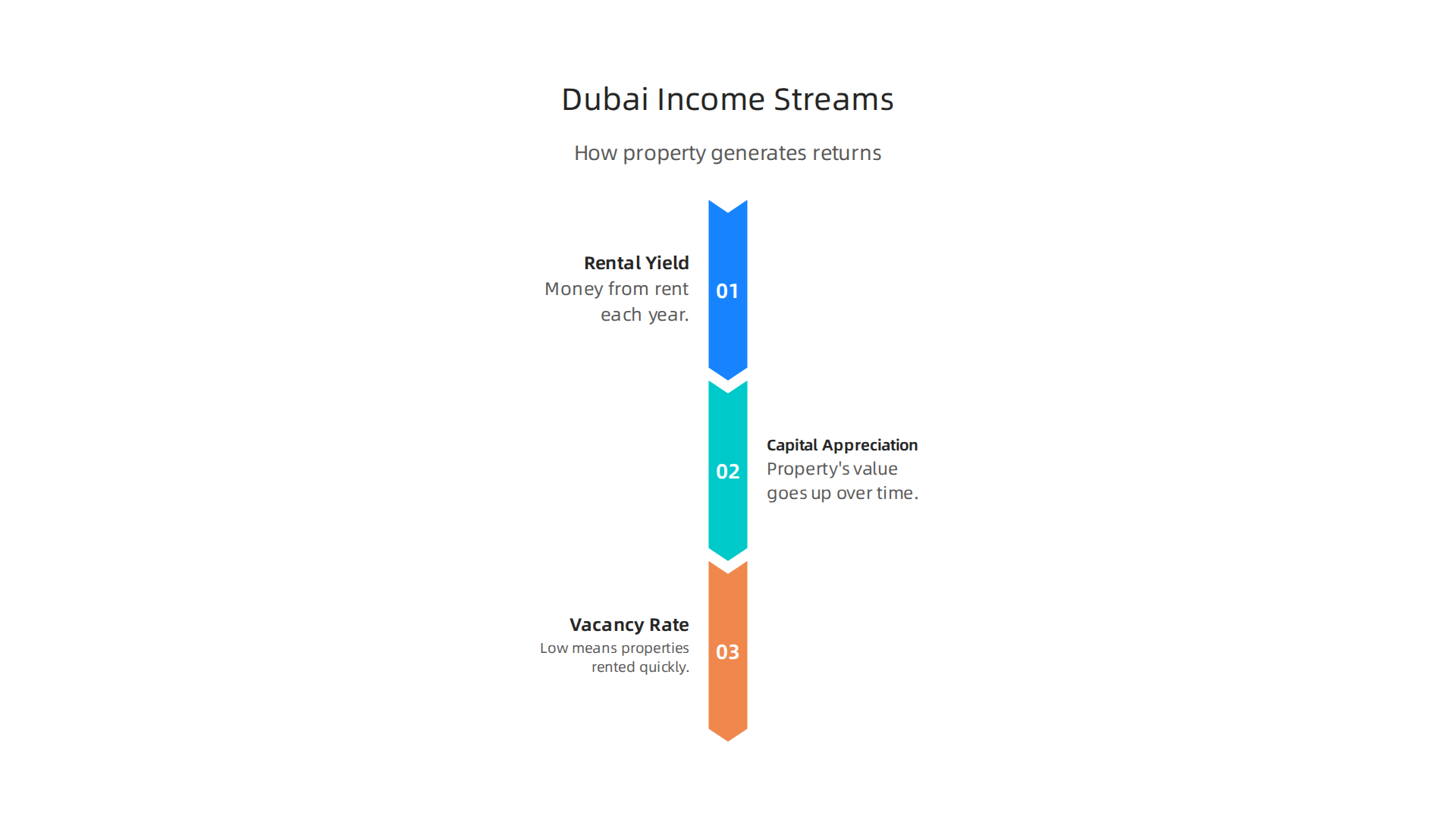
- Rental Yield: This is the money you get from rent each year, shown as a percentage of the property’s price. For example, if you buy a home for $100,000 and rent it for $7,000 a year, your rental yield is 7%. In Dubai, rental yields are quite strong. The average rental yield across Dubai was about 6.68% as of April 2026. Apartments often give even higher returns, with an average of 7.15% Average Rental Yields in Dubai – 2026 Market Insights. This consistent income makes Dubai one of the best long-term investments.
- Capital Appreciation: This means your property’s value goes up over time. If you buy a property for $200,000 and it later sells for $220,000, that $20,000 is capital appreciation. Dubai’s property market has seen good price growth, with residential prices growing around 5-7% year-on-year by mid-2026 Dubai Property Market Shows Resilience in Q2 2026. This can add a lot to your total earnings.
- Vacancy Rate: This tells you how many properties are empty and not being rented out. A low vacancy rate is a good sign because it means properties are rented quickly, and you do not lose money while waiting for a tenant. Dubai usually has low vacancy rates. In early 2026, the average citywide vacancy rate was around 5.2% Dubai Property Market Q1 2026.
This shows that there are plenty of people looking for rentals.
Understanding these points helps you see why Dubai offers some of the best investments for starters. For more details on growing your property wealth, read about maximizing long-term Dubai real estate investments 2026. You can also dive deeper into the overall market with our Dubai property market 2026 data-driven guide for investors and buyers.
Now that you understand what makes the Dubai property market tick, it is time to look at the different kinds of properties you can buy. Choosing the right type of real estate investments is a big step for investments in real estate for beginners.

Each type has its own good and bad points, and fits different goals like earning rent or seeing your property value grow.
Here is a simple look at the main property types:
Apartments
Apartments are a popular choice for many starters in Dubai. They range from small studios to large penthouses.
- Good things:
- Easier to manage: Buildings often handle repairs and upkeep, making your life simpler.
- Good for rent: Apartments, especially smaller ones, are in high demand for renters. This can give you steady rental income.
- More affordable: They are often less expensive than villas or townhouses, making them great for your first buy. You can explore options like a 1 Bhk for Sale in Dubai 2026 Smart Guide to Ready to Move Apartments.
- Things to think about:
- Less space: You usually get less space and privacy compared to a house.
- Value growth: While they grow in value, it might not be as much as a large villa.
Villas and Townhouses
These offer more space and privacy, usually with a garden. Villas are stand-alone homes, while townhouses share walls with neighbors.
- Good things:
- More space and privacy: Great for families or those who want more room.
- Higher value growth: Over time, villas often see strong capital appreciation.
- Long-term tenants: Families often look for longer leases, giving you stable tenants. For specific areas, you can check out guides like Emirates Hills Villas for Sale 2026 Market Analysis and Buying Guide.
- Things to think about:
- More expensive: They cost more to buy and also to maintain.
- Less liquid: It can sometimes take longer to sell a villa than an apartment.
- More to manage: You are responsible for more repairs and garden care.
Off-Plan Properties
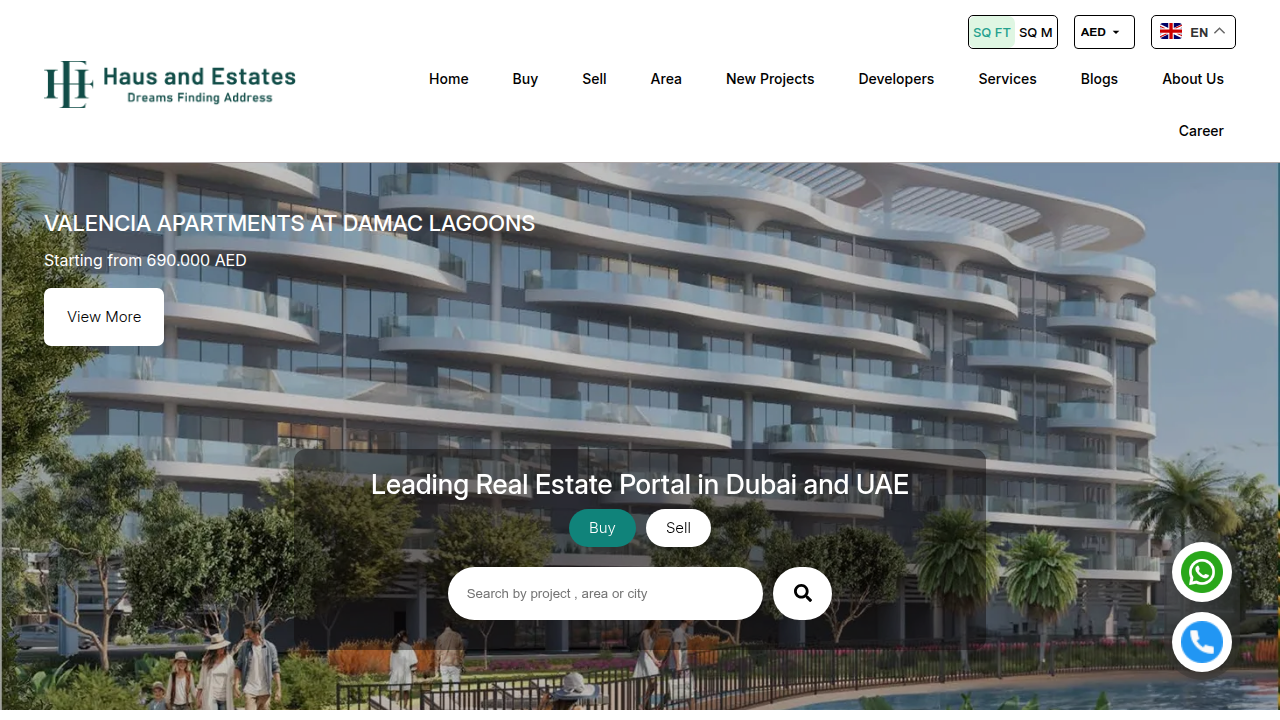
"Off-plan" means you buy a property before it is built or while it is still being built. This has become a very popular way to buy property in Dubai. In the first three months of 2026, about 70% of homes bought were off-plan, showing how popular they are New Off-Plan Properties in Dubai: Investment Guide 2026.
- Good things:
- Lower starting price: You often buy off-plan homes for 10-30% less than similar homes that are already built Off-Plan vs. Ready Property in Dubai 2026 – Behnia Tavassoli.
- Flexible payments: Developers offer easy payment plans spread over several years.
- Potential for high growth: If the market grows while your property is being built, its value can go up a lot before you even move in. Off-plan properties can offer 8-12% return on investment Best Off-Plan Projects in Dubai 2026 – Top ROI, RERA-Verified.
* **New home:** You get a brand-new property with modern designs. Find out more about [Investments with Best ROI in Dubai 2026 Off Plan Rentals and Luxury Properties](https://dubairealestatenews.com/investments-with-best-roi-in-dubai-2026-off-plan-rentals-and-luxury-properties).
- Things to think about:
- Waiting time: You have to wait for the building to be finished.
- Market risk: The market could change, and the value might not grow as much as you hoped.
- Financing: If you are an expat, you might need a bigger down payment for off-plan properties, sometimes as much as 50% Mortgage Eligibility for Expats in UAE (2026) | REMAP.
Commercial Properties
These are properties used for businesses, like offices, shops, or warehouses.
- Good things:
- High rental income: Businesses often sign longer leases and can pay higher rents.
- Stable tenants: Businesses tend to stay longer than residential tenants.
- Things to think about:
- Higher cost: Commercial properties usually cost more money upfront.
- More complex management: Dealing with business tenants can be more complicated.
- Harder to sell: The market for commercial properties is smaller, so it can be harder to find a buyer quickly.
For most investments in real estate for beginners, apartments or off-plan properties are often the best investments for starters due to their lower entry costs and simpler management. Villas and townhouses are good if you have more money and want strong capital growth. Commercial properties are usually for more experienced investors.
Choosing the right property type depends on your personal goals and how much risk you are comfortable with. For personalized advice on which property type might be best for you, consider connecting with an expert.
Ready to make smart choices for your Dubai real estate journey?
FREE Dubai Real Estate Consultation
Now that you know about the different kinds of properties in Dubai, let us look at the smart ways you can invest in them. Choosing the right method is just as important as picking the right property, especially for investments in real estate for beginners. Each strategy has its own starting costs, time needed, and how much risk you might take.
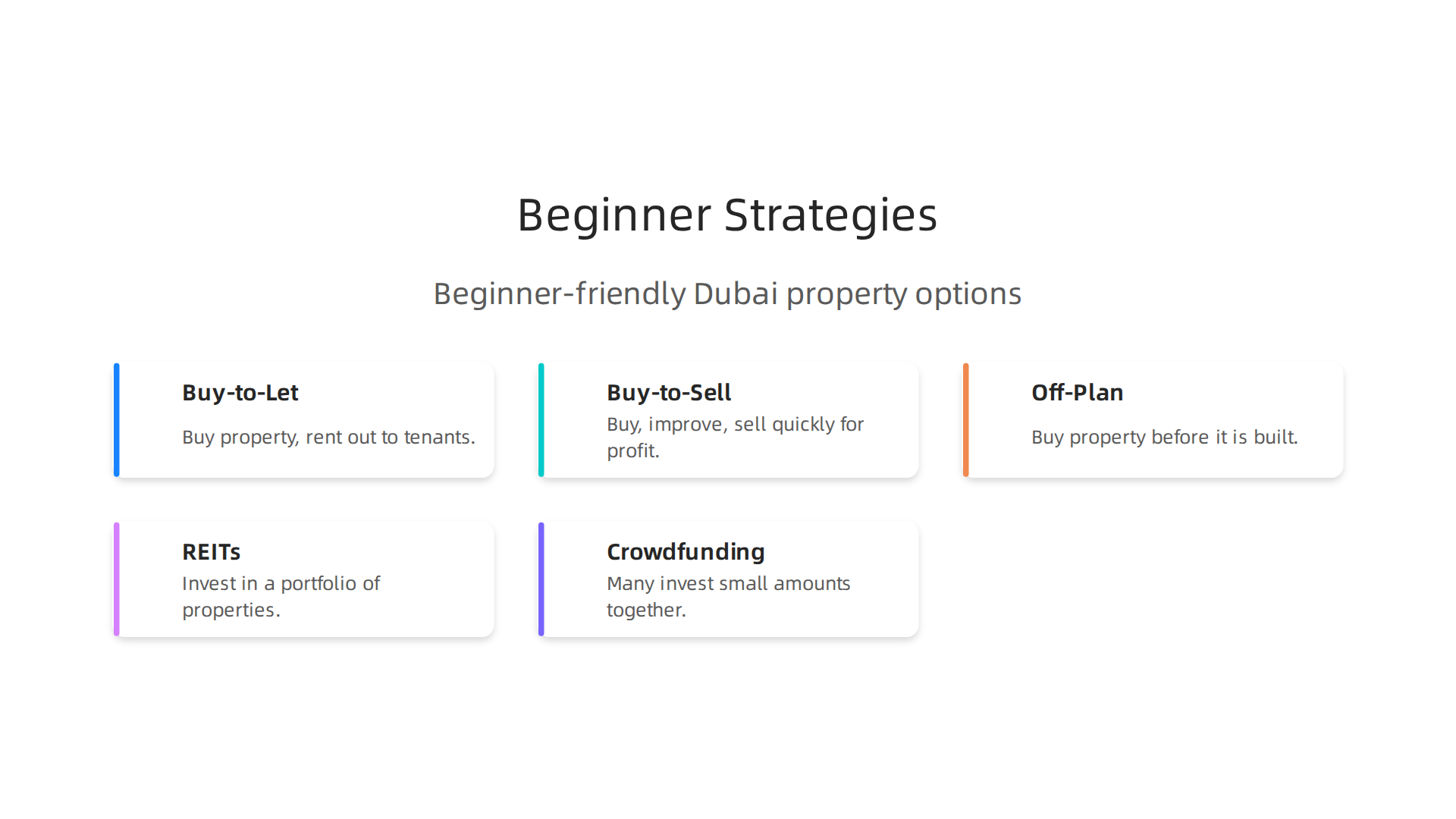
Here are some beginner-friendly strategies to help you make your first investments in Dubai real estate.
Buy-to-Let Strategy
This is one of the most common types of real estate investments. You buy a property with the main goal of renting it out to tenants.
- How it works: You buy an apartment or villa, then find renters. They pay you rent each month.
- Good things: You get a steady income from rent. Over time, the property itself might also go up in value. This can be a good choice for those looking for best long-term investments.
- Things to think about: You need to find good tenants and take care of the property. This means dealing with repairs and maintenance.
- For beginners: It is a good option if you want regular income and do not mind being involved in managing the property.
Buy-to-Sell Strategy (Flipping)
This strategy is about buying a property, usually one that needs some work, improving it, and then selling it quickly for more money.
- How it works: You find a property at a good price, fix it up, and sell it faster than a typical long-term investment.
- Good things: You can make a quick profit if the market is good and you improve the property well.
- Things to think about: This has higher risks. You need to know how much repairs will cost and if the market will stay strong for a quick sale. It requires more hands-on work and market knowledge.
- For beginners: This can be risky. It is usually better for those with some experience and a good understanding of renovation costs and market changes.
Off-Plan Strategy
As we talked about before, off-plan means buying a property before it is built or finished. It is a popular way to invest in Dubai.
- How it works: You buy directly from a developer, often with a payment plan spread over the construction period.
- Good things: You usually pay less than for a finished home. Developers offer flexible payment plans, and your property’s value can grow a lot while it is being built. Many investors choose off-plan properties due to benefits like higher return on investment and more payment flexibility, as noted in the Off-Plan Property Investment in UAE: Complete Buying Guide 2026.
- Things to think about: You have to wait for the property to be completed. The market could change, affecting the final value.
- For beginners: It can be a smart way to get into the market with a lower initial cost and good growth potential, but patience is key.
Real Estate Investment Trusts (REITs)
REITs are companies that own, operate, or finance income-producing real estate. You can invest in REITs by buying shares, much like buying shares in any other company.
- How it works: Instead of buying a whole property, you buy a small piece of a larger portfolio of properties. The company then pays out most of its rental income to you as dividends.
- Good things: You can start with much less money (sometimes as low as AED 10,000 in Dubai) compared to buying a full property, which usually costs AED 500,000 or more. REITs offer easy ways to sell your investment (liquidity) and help you spread your money across different properties. You can explore a Complete Investment Guide to Real Estate Investment Trusts (REITs) in Dubai. Dubai has several REITs, including Emirates REIT and Dubai Residential REIT, with some offering yields around 7.7% in 2026, according to a Dubai REIT Dividend Yield 2026: Full Comparison.
- Things to think about: The value of your shares can go up or down, just like stocks. You do not own the physical property yourself.
- For beginners: This is often seen as one of the best investments for starters because it is easy to start, less hands-on, and offers good returns.
Real Estate Crowdfunding
This is a newer way to invest where many people put small amounts of money together to invest in a larger property project.
- How it works: Online platforms let you invest as little as a few hundred dirhams into a property project. You own a small "fraction" of the property and get a share of the rental income or profits when it is sold.
- Good things: It is very accessible, allowing investments from as low as AED 500. This means you can invest in bigger projects that you normally could not afford alone. Fractional ownership platforms in Dubai let investors enter the property market with little money, earning rental income without the full responsibilities of ownership, as detailed in Dubai REITs: Available Options for Investors.
- Things to think about: You have less control over the property. You need to trust the platform you are using. Selling your share might not always be quick.
- For beginners: A great option if you want to invest a small amount and gain exposure to the Dubai property market without the hassle of direct ownership.
Finding Your Balance
When starting your journey in Dubai real estate, think about these trade-offs:
- Liquidity: How fast can you turn your investment into cash? REITs and crowdfunding are usually faster than selling a whole property.
- Hands-on Management: How much time and effort do you want to put in? Buy-to-let and buy-to-sell need more work. REITs and crowdfunding need very little.
- Risk vs. Reward: Higher risk can mean higher rewards, but also bigger losses. Off-plan can offer high rewards but also has market risks. REITs are generally lower risk.
For many looking into investments in real estate for beginners, combining strategies can be smart. You might put a small amount into a REIT for steady income and also look into an off-plan apartment for potential growth. The best approach matches your comfort with risk and your financial goals.
4) Costs, financing and taxes: what beginners must budget for
Now that you know about the different ways to invest in Dubai real estate, it is important to understand the money side of things. Before you dive into any investments in real estate for beginners, you need a clear idea of all the costs. This includes both one-time fees and money you will spend regularly. Knowing these numbers helps you plan your budget well.

One-Time Costs to Expect
When you buy property in Dubai, there are several fees you pay upfront:
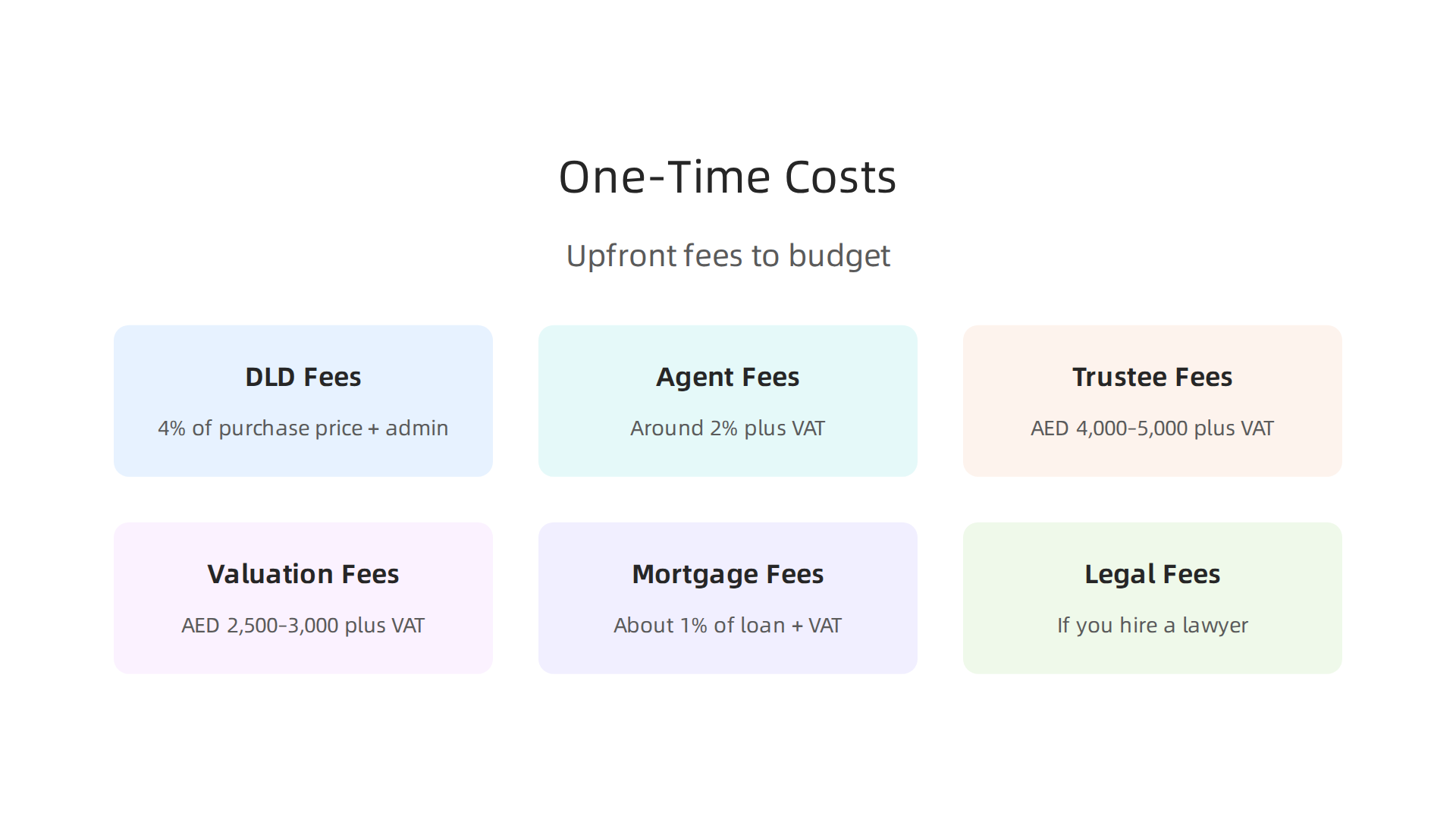
- Dubai Land Department (DLD) Fees: This is the biggest fee. Buyers usually pay a flat 4% of the property’s purchase price to the government. On top of this, there are smaller admin fees, which can be around AED 3,000 to AED 5,000, as explained in one expert guide about buying property from abroad. This DLD fee helps register the property in your name and makes the sale official. According to another guide, the DLD also charges small amounts like AED 250 for a title deed certificate.
- Agent or Broker Fees: If you use a real estate agent to help you find and buy a property, you will pay them a fee. This is usually around 2% of the purchase price, plus a 5% value-added tax (VAT) on that fee. It is smart to work with a trustworthy agent.
- Trustee Fees: When you buy a property, a trustee office helps handle the money and papers between you and the seller. They charge a fee, often around AED 4,000 to AED 5,000, plus VAT.
- Property Valuation Fees: If you are getting a mortgage, the bank will need to check the property’s value. You pay a fee for this, usually around AED 2,500 to AED 3,000, plus VAT.
- Mortgage Arrangement Fees: Banks charge a fee for setting up your mortgage, typically about 1% of the loan amount, plus VAT.
- Legal Fees: If you choose to hire a lawyer to help with the paperwork, you will have their fees too. This can be very helpful for investments in real estate for beginners to make sure everything is correct.
Ongoing Costs You will Pay
After you buy your property, there are costs you will pay regularly:
- Service Charges: These are fees paid every year for the upkeep of common areas like swimming pools, gyms, gardens, and building security. These costs are especially important for apartments for sale in Dubai 2026 and villas in managed communities. The amount depends on the property and community, and it is crucial to know these before buying, as mentioned in a guide on buying property in Dubai.
- Maintenance and Repairs: Even if you pay service charges, you might need to fix things inside your own property, like appliances or plumbing. You should always budget for these unexpected repairs.
- Property Insurance: It is a good idea to get insurance for your property to protect against damages, fire, or other issues.
- Utility Bills: You will pay for electricity, water, cooling, and internet services each month.
Financing Your Investment in Dubai
Many people, including expats and residents, get a mortgage to buy property in Dubai. Here is what you need to know:
- Down Payment: Buyers generally need to put down a deposit of 10% to 20% of the property’s total cost when buying. For first-time buyers and expats, banks usually lend up to 75% of the property value, as detailed in a 2026 guide on how to buy property in Dubai.
- Documents for a Mortgage: You will need a valid passport, and if you live in the UAE, your Emirates ID and residence visa. Banks will also ask for proof of funds, like bank statements.
- Getting Help: Finding the right bank and mortgage can be tricky. It is wise to speak with a financial advisor or an expert who knows the Dubai market well.
Taxes on Property in Dubai
One great thing about investing in Dubai real estate is the tax situation. The UAE does not charge annual property taxes. There is no income tax on rental earnings and no capital gains tax when you sell your property for a profit. This makes Dubai a very attractive place for both best long-term investments and shorter-term gains.
In summary, while Dubai offers exciting opportunities for investments in real estate for beginners, understanding all the costs and financing options from the start is super important. This helps you avoid surprises and manage your money wisely.
Ready to explore your property investment options with personalized guidance?
FREE Dubai Real Estate Consultation
After understanding all the costs of investing in Dubai real estate, the next smart step is to figure out what kind of money you can expect to make. This means looking at both the risks and the possible returns. For anyone new to [investments in real estate for beginners], simple calculations can help you decide if a property is a good choice.
Simple Calculations for Beginners
You want to know if your money will grow, right? Here are some easy ways to measure that:
Gross Rental Yield
This is one of the first things investors look at. It tells you how much rent you could earn each year compared to the property’s price. It does not include any costs yet.
How to calculate it:
(Annual Rental Income / Property Purchase Price) x 100
For example, if you buy an apartment for AED 1,000,000 and expect to rent it out for AED 70,000 per year, your gross rental yield is (70,000 / 1,000,000) x 100 = 7%.
In 2026, Dubai’s property market offers strong rental returns. Average gross residential rental yields are about 6.58%, with apartments generally doing better at around 6.9% to 7.07%. Villas and townhouses typically have lower yields, closer to 4.5% to 4.93%, according to recent market reports. Some areas even see average gross apartment yields of 7.15%, with certain communities going above 8%.
Net Rental Yield
While gross yield is a quick look, net rental yield gives you a clearer picture because it includes all the costs you learned about in the last section. This includes service charges, maintenance, and other running costs.
How to calculate it:
((Annual Rental Income – All Annual Property Costs) / Property Purchase Price) x 100
Let us say your annual rental income is AED 70,000, and your yearly costs (service charges, maintenance, insurance) add up to AED 10,000. For a property bought at AED 1,000,000, your net rental yield would be ((70,000 – 10,000) / 1,000,000) x 100 = 6%. This is a much more realistic number for making [best long-term investments] decisions.
Cash-on-Cash Return
If you are using a mortgage, the cash-on-cash return is very useful. It shows you the return on the actual money you put into the investment, not the total property value.
How to calculate it:
(Annual Pre-Tax Cash Flow / Total Cash Invested) x 100
Annual pre-tax cash flow is your net rental income minus your mortgage payments. Total cash invested includes your down payment, closing costs, and any other money you paid upfront. This helps you see how well your own money is working for you, which is key for [best investments for starters].
Capital Appreciation
This means how much your property’s value goes up over time. Dubai’s property market has seen good growth. In mid-2026, many market watchers note annual price growth in residential properties to be around 5% to 7%. This increase in value is a big part of the overall return on your [type of real estate investments].
Practical Checklist for Your Research
Before you make any big decisions, do your homework. This is called due diligence:
- Look at Similar Properties: Check what similar properties in the same area are selling for and renting for. This helps you know if the price and expected rent for your chosen property are fair.
- Study Service Charge Trends: Always ask about the yearly service charges and how they have changed over time. These costs can eat into your profits, so knowing them well is important.
- Check the Developer’s History: Especially if you are looking at off-plan properties (properties that are not built yet), research the developer. Do they finish projects on time? Are their previous buildings well-maintained? For more tips on what to look out for, you can read about 10 UAE Property Purchase Red Flags to Watch Before Buying in 2026.
By using these simple calculations and doing your research, you can make smarter choices and feel more confident about your [investments in real estate for beginners] in Dubai.
After doing your homework on property costs and potential earnings, you are ready for the next big step. Now, let us walk through the buying process in Dubai, step by step. This guide is made for anyone looking into [investments in real estate for beginners]. We will cover everything from finding your dream property to signing the papers.
6) Step-by-Step Beginner Checklist: From Research to Signing the Agreement
Buying property can feel like a big puzzle. But in Dubai, the steps are clear. It usually takes a few weeks to finish, especially if you are using a bank loan. Here is a simple plan to guide your way.
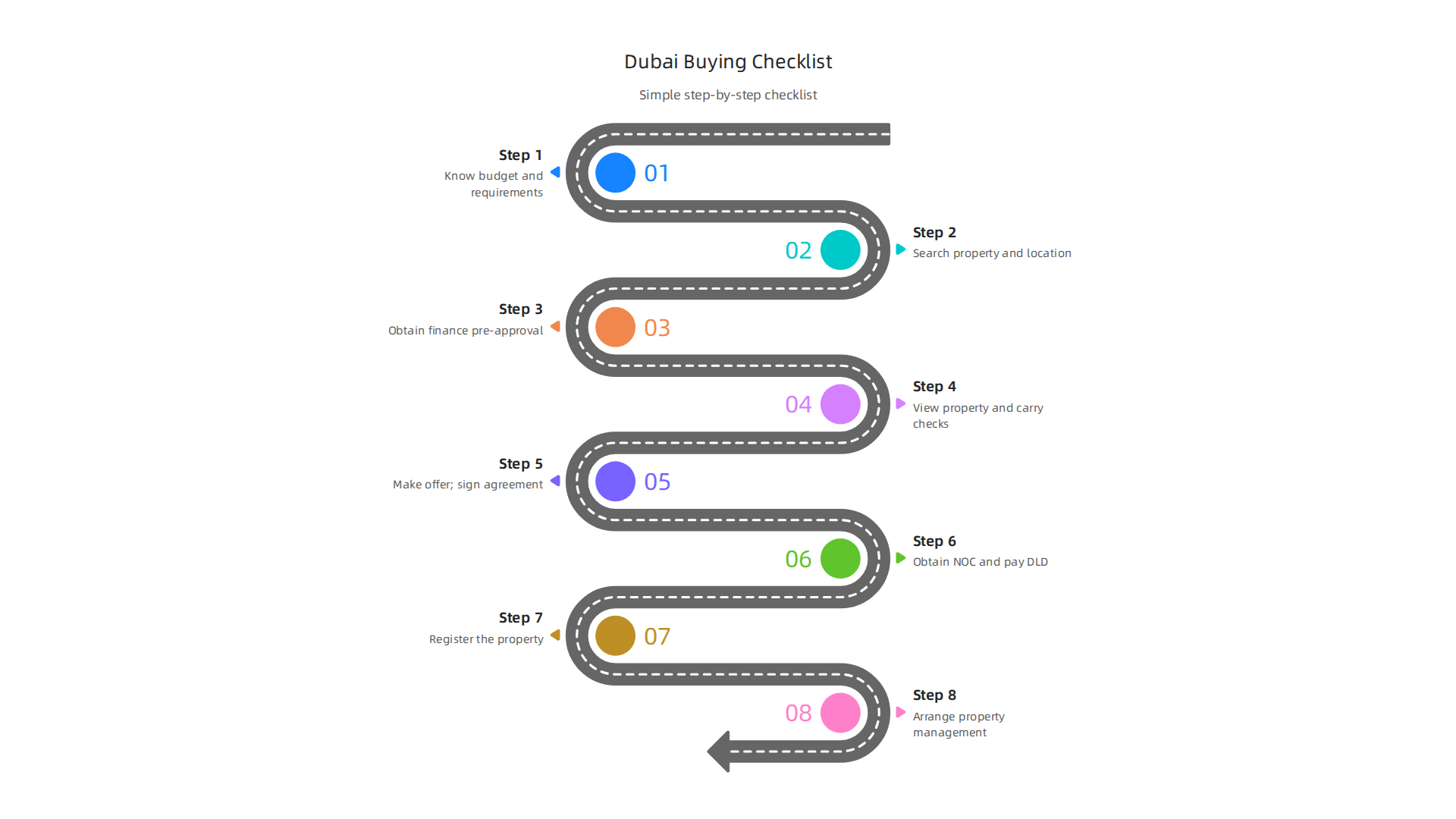
Step 1: Know Your Budget and What You Want
Before you start looking, be very clear about how much you can spend. Think about if you will pay with cash or need a mortgage. Also, decide what kind of property you want. Are you looking for a small apartment for rental income? Or a bigger home for your family? Knowing this helps you narrow down your choices for [type of real estate investments]. This first step is key for any [best investments for starters].
Step 2: Find Your Property and Location
Once your budget is set, start looking for properties. Work with a trusted real estate agent who knows the local market well. They can help you find areas that fit your goals, whether you want high rental income or good growth in property value over time. Choosing the right expert can make a big difference, so consider finding a Choosing the Right Real Estate Consultant Dubai.
Step 3: Get Finance Pre-Approval (If You Need a Loan)
If you are getting a mortgage, it is smart to get pre-approved by a bank early on. This shows sellers you are serious and can afford the property. It also helps you know your true buying power.
Step 4: View the Property and Do Your Checks
When you find a property you like, visit it in person. Look closely at everything. Ask about the building’s age, any needed repairs, and what is included in the sale. For properties that are not built yet (off-plan), check the developer’s past work and reputation. This is where your earlier research truly pays off.
Step 5: Make an Offer and Sign the Agreement
If you are happy with the property, your agent will help you make an offer. Once the seller agrees, you will sign a document called a Memorandum of Understanding (MOU) or Form F. This is a promise between you and the seller. When signing, you will usually put down a deposit, often 10-20% of the property price.
Foreigners can buy property in Dubai without needing a special visa, and the process can be quite simple. However, you will need some important papers. According to a 2026 guide on buying property in Dubai, essential documents include a valid passport and, if you live in the UAE, your Emirates ID and residence visa. Other key documents include a signed sale agreement and a No Objection Certificate (NOC) from the developer. For more details on this process, you can refer to this How to Buy Property in Dubai (2026 Guide).
Step 6: Get the No Objection Certificate (NOC) and Pay DLD Fees
Before the property can officially change hands, you need an NOC from the developer. This document confirms there are no unpaid service charges or issues with the property. You will also need to pay the Dubai Land Department (DLD) fees, which are usually 4% of the property’s purchase price. This is a big part of the total costs. There are also smaller admin fees, which can be around 3,000 to 5,000 dirhams.
Step 7: Register Your Property
After paying the DLD fees and getting the NOC, the property is officially transferred to your name. You will receive your Title Deed, which is proof that you now own the property. This completes the buying process.
Step 8: Set Up Property Management (For Investors)
If you bought the property as an investment to rent out, your next step is to arrange for property management. This can include finding tenants, handling maintenance, and collecting rent. Having a good property manager can make your [best long-term investments] much easier.
Navigating all these steps can be confusing, especially for new investors. If you want a more personal guide through the Dubai real estate market, consider reaching out to an expert.

Unlock tailored advice and deep market insights to make your property journey smoother.
FREE Dubai Real Estate Consultation
Summary
This guide explains how new investors can get started with Dubai real estate in 2026, covering market drivers, property types, investment strategies, costs, and step-by-step buying actions. It outlines why Dubai remains attractive—strong rental demand, clear rules, and solid yields (average gross residential yields near 6.6%)—and walks you through apartments, villas, off-plan, commercial, REITs and crowdfunding so you can match choices to your goals. The article breaks down one-time and ongoing costs (including the 4% DLD fee), financing basics for expats, simple yield and cash-on-cash calculations, and practical due-diligence checks. It also compares hands-on and passive routes, shows how to estimate net returns, and gives a clear checklist from research to title deed. After reading, you’ll know which property types and strategies fit your budget and risk appetite, how to run basic ROI maths, and what steps to follow to buy and manage a Dubai investment property confidently.